
Medically reviewed by Shaun Larsen, OD – Doctor of Optometry. Low vision rehabilitation specialist.
Last clinically reviewed: August 2026 | Next scheduled review: August 2027 | Reading time: 14 minutes
Editorial standard: every clinical claim on this page is sourced to a peer-reviewed journal, the National Eye Institute, or a professional society guideline, cited in brackets [1] and listed under References.
Discover the most effective low vision aids, handpicked by ophthalmologists and low vision specialists. These products have been selected to help individuals with vision challenges lead a more independent and fulfilling life.
Low vision is vision loss that cannot be corrected with standard glasses, contact lenses, medication, or surgery, and that interferes with daily activities [1]. In the United States, low vision is commonly defined as best-corrected visual acuity of 20/70 or worse in the better-seeing eye, while legal blindness is best-corrected acuity of 20/200 or worse or a visual field of 20 degrees or less [1]. The World Health Organization's ICD-11 grades distance vision impairment as mild (worse than 6/12 to 6/18), moderate (worse than 6/18 to 6/60), severe (worse than 6/60 to 3/60), and blindness (worse than 3/60, roughly 20/400) [2]. Low vision aids are optical, electronic, and non-optical tools – magnifiers, telescopes, filters, video magnifiers, wearable cameras, lighting, and tactile adaptations – prescribed to make the most of the vision that remains.
The need is large and growing. A Bayesian meta-analysis in JAMA Ophthalmology estimated that 7.08 million Americans live with visual acuity loss (20/40 or worse in the better eye with correction), including 1.08 million living with blindness [3]. Earlier NEI-funded projections estimate that the number of Americans with best-corrected visual impairment will roughly double from 3.2 million in 2015 to about 7 million by 2050 as the population ages [4]. The leading causes are age-related macular degeneration (about 19.8 million Americans with any AMD [5]), diabetic retinopathy (about 9.6 million [6]), glaucoma (about 4.22 million [7]), and cataract. Which of these conditions you have determines which category of aid is likely to help – a point this page returns to below.
Most low vision aids work by one of four mechanisms: magnification (making the retinal image larger so a damaged retina can resolve it), field enhancement (prisms or minification that relocate or compress images for people with field loss), contrast and glare control (filters, lighting, reversed-polarity displays), and sensory substitution (converting print or scenes to speech or touch) [8]. Magnification is the workhorse, and it obeys simple optics. A magnifier's strength can be stated in diopters (D) or in 'x' notation; by the most common convention, x = D/4, so a +16 D lens is a 4x magnifier. The stronger the lens, the shorter its working distance – focal distance in centimeters equals 100 divided by the diopter power, so a +16 D magnifier focuses about 6 cm from the page – and the smaller the field of view. Power always trades against field and working room; the correct prescription is the lowest power that lets you read your target print comfortably, not the highest power in the catalog.
Clinicians estimate the starting power with Kestenbaum's rule: the reading add in diopters approximately equals the inverse of the distance acuity, so a person with 20/100 vision needs roughly a +5 D add to read newsprint-sized (1M) print [9]. Because fluent reading requires print about twice the size a person can just barely resolve – an 'acuity reserve' of at least 2:1, with some studies favoring more for high-speed reading – the final prescription is usually stronger than Kestenbaum's minimum and is refined by trial with real reading material [10]. This is why a proper low vision evaluation, not guesswork from a website, should set the power.
A low vision evaluation is longer and more functional than a routine eye exam. Following the American Academy of Ophthalmology's Vision Rehabilitation Preferred Practice Pattern, it typically includes a task-oriented history (what you need to read, see, or do); distance acuity on a logMAR (ETDRS-style) chart, which measures accurately below 20/200 where standard projected charts cannot; careful low vision refraction; contrast sensitivity testing with a Pelli-Robson or Mars chart, because poor contrast sensitivity predicts trouble with faces, steps, and dim print even when acuity looks adequate; continuous-text reading assessment (for example the MNREAD chart, which measures reading acuity, critical print size, and maximum reading speed); and mapping of central scotomas – blind spots – with an Amsler grid or, where available, fundus-tracking microperimetry that locates the preferred retinal locus a patient uses in place of a damaged fovea [8,11]. The exam ends with device trials matched to your tasks, and a plan for training. Referral for vision rehabilitation is now considered standard of care for every patient with uncorrectable vision loss [8].
Low vision aids fall into five practical categories [8,12]:
Optical magnifiers. Handheld, stand, dome, and bar magnifiers, plus high-add 'microscope' spectacles and prismatic half-eye readers for near tasks.
Telescopes. Handheld monoculars, spectacle-mounted full-field telescopes, and bioptic telescopes for distance spotting and, in most states, licensed driving.
Absorptive filters. Tinted and polarized lenses that control glare and photophobia and protect against UV.
Electronic and wearable devices. Desktop and portable video magnifiers (CCTVs), text-to-speech OCR readers, head-worn systems such as eSight Go and Vision Buddy, and screen-access software.
Non-optical aids. Task lighting, large print, typoscopes and bold-line paper, writing guides, and talking household devices – inexpensive tools that often deliver the biggest day-to-day gains.
Our range of low-vision aids is extensive and caters to a wide variety of needs for people living with visual impairments. This extensive selection offers everything from handheld magnifiers to electronic ones, and even large-print books and high-contrast reading materials. For free audiobook access, US residents with a qualifying visual impairment can enroll in the National Library Service Talking Books program through the Library of Congress; ask us or your low vision specialist for a certifying signature.
The right device depends on three things: your diagnosis (which determines whether you need magnification, field enhancement, or glare control), your measured vision (acuity, contrast sensitivity, and scotoma location), and the specific tasks you care about. A device that is perfect for reading mail is often wrong for watching television or crossing streets, which is why most patients end up with a small toolkit rather than a single aid [8]. Here is how the main diagnoses map to device categories:
AMD, Stargardt disease, and myopic maculopathy destroy central detail vision while sparing the periphery. These patients are the classic magnification responders: stand and handheld magnifiers, high-add spectacles, desktop video magnifiers, and wearables all enlarge the image onto healthy paracentral retina. Many patients spontaneously develop a preferred retinal locus (PRL) – an off-center retinal spot used in place of the fovea. Formal eccentric viewing training can help some patients use it more efficiently, though the evidence is mixed: a 2014 meta-analysis found gains in near acuity and reading speed [13], while the 2023 EFFECT randomized trial found no systematic benefit over usual care in progressing macular disease [14]. Training is reasonable to try, especially in stable end-stage disease, but should not delay device provision.
Advanced glaucoma and RP produce the opposite problem: often-sharp central vision through a constricted 'tunnel.' Magnification can make things worse by pushing images outside the remaining field. These patients do better with contrast and lighting optimization, glare-control filters, minification tools such as a reverse (backwards-held) telescope or minus lens to survey a scene, and early referral for orientation and mobility (O&M) training with a long cane where the field is very restricted [8]. Night-vision complaints in RP sometimes respond to portable illumination and camera-based wearables.
Loss of the same half of the visual field in both eyes calls for prisms rather than magnifiers. Peripheral 'Peli' prism glasses shift images from the blind half-field into view; in a multicenter randomized crossover trial against sham prisms, 64% of patients preferred the real prisms and reported better obstacle avoidance while walking [15]. Scanning training complements them.
Light sensitivity accompanies albinism, aniridia, achromatopsia, cone dystrophies, and many corneal and retinal diseases. Absorptive filters – fit-over sunwear, amber, plum, and gray tints, and the rose-colored FL-41 filter discussed below – are the first-line tools, chosen by structured indoor and outdoor trial rather than by color fashion.
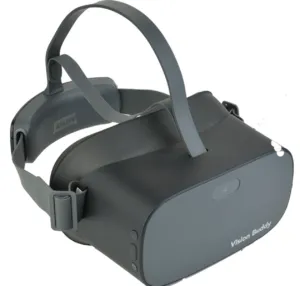
Vision Buddy is a head-mounted electronic system designed primarily for television watching: a hub streams the TV signal directly into the headset in high definition, and a camera mode adds real-world magnification and OCR text-to-speech for reading mail, labels, and menus. It suits patients with moderate to severe central vision loss (AMD, diabetic retinopathy, glaucoma) whose main frustration is TV, and it is deliberately simple – one switch, no smartphone required – which matters for older users [16].
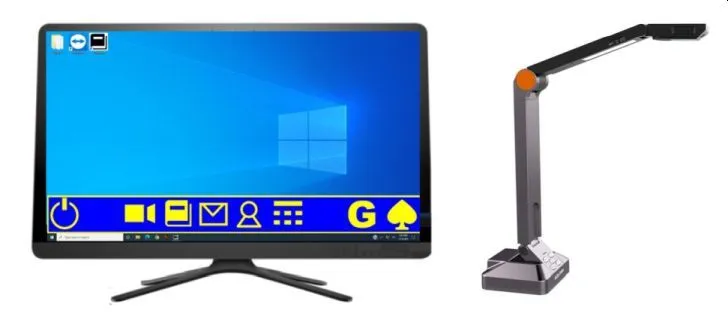
The EZReader is a desktop video-magnifier (CCTV-class) reading system: a camera over a reading surface displays magnified, contrast-enhanced text on a screen, with adjustable polarity (white-on-black often reads best in macular disease). Stand-mounted electronic magnifiers are the best-evidenced reading aids we sell: the Cochrane review of reading aids for adults with low vision found reading speeds improve with stand-mounted electronic devices compared with optical magnifiers of similar effective power [12].
eSight, now developed under Gentex Corporation, released its fifth-generation device, eSight Go, in 2024: a lighter wearable that captures live video and re-displays it enhanced on two OLED screens in front of the eyes, with improved field of view and image stabilization over eSight 4 [17]. It is intended for people with central vision loss in roughly the 20/60 to 20/800 acuity range who want one head-worn device for distance, intermediate, and near tasks. Insurance rarely covers it (see coverage section below), so we arrange in-person demonstration before purchase.

High-add 'microscope' spectacles put strong plus power (typically +4 to +20 D or more) into an ordinary frame, freeing both hands for reading. Their physics demands a short working distance – at +10 D the page must be held 10 cm away – which takes practice but delivers wide, hands-free fields. Prismatic half-eye readers (usually +4 to +12 D with base-in prism) let both eyes work together at these close distances by offloading the convergence demand, and are a proven, inexpensive first spectacle for mild to moderate central vision loss [8,9].
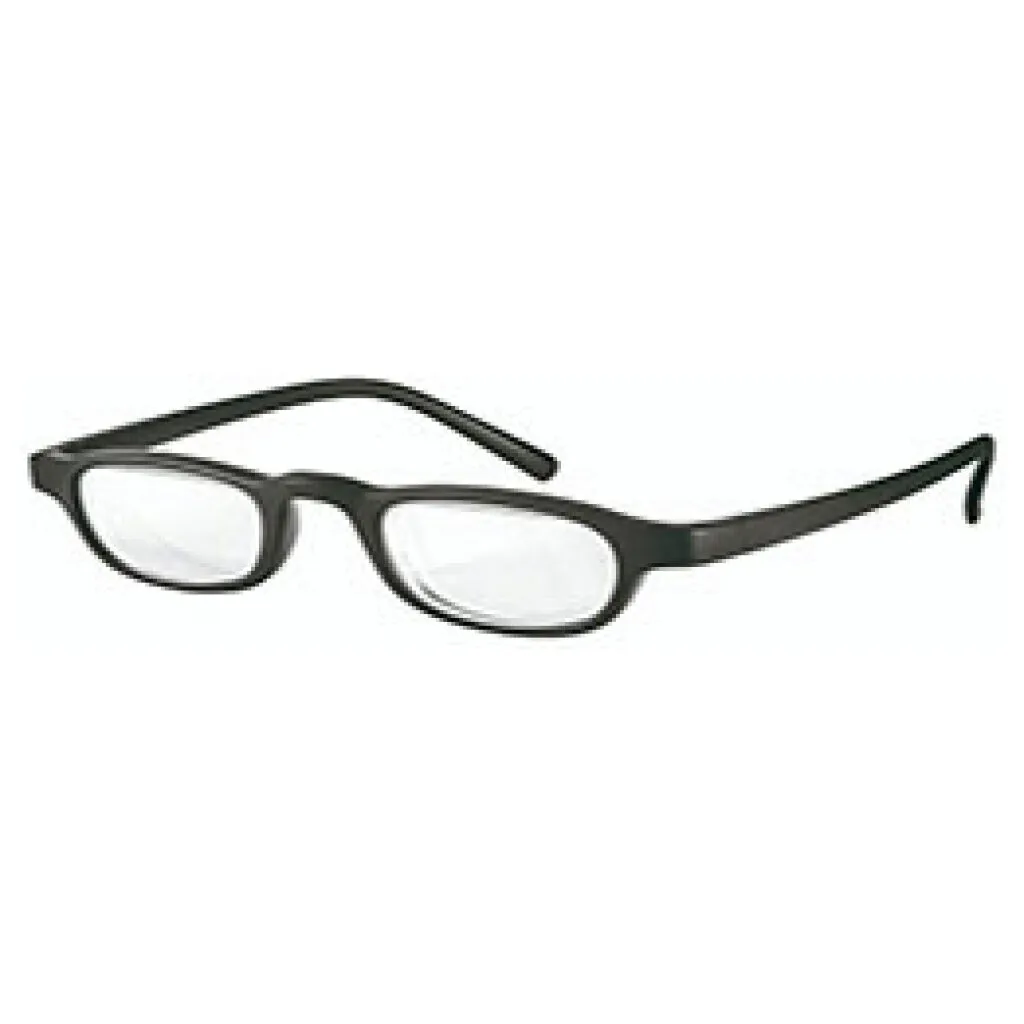
Low vision sunglasses which have specific filters that reduce glare and enhance contrast. Patients with low vision usually have a vision condition or disease and it's vital to protect the existing vision and structure from harmful UV rays. Low vision sunglasses come in a variety of forms to compliment other low vision aids being used simultaneously. Cocoons are a common fit over style sunglasses that go over other glasses. Wrap around sunglasses help block side glare and flip up to allow for switching quickly between clear and filtered. Tint choice is about comfort and subjective contrast, and it should be trialed, not bought by color name. Orange and amber filters absorb much of the short-wavelength (blue) spectrum that scatters most inside the eye, which many patients experience as crisper contrast outdoors; exact absorption varies by product, and no everyday tint blocks 100% of blue light. Yellow tints are popular for overcast and low-light conditions. The rose-colored FL-41 filter, which attenuates light around the 480 nm band, has the best clinical evidence of any therapeutic tint: controlled studies show it reduces blink rate and light sensitivity in benign essential blepharospasm, and a controlled trial in childhood migraine found fewer light-triggered attacks with FL-41 than with a comparison tint [18,19]. Be aware that for the general claims made about 'blue-blocking' health benefits, a 2023 Cochrane review of 17 randomized trials found blue-light filtering lenses probably make no difference to eye strain and found no evidence of macular protection [20] – so we fit filters for measured glare relief and comfort, not disease prevention. What is not controversial: UV-A/UV-B protection is essential for damaged eyes, and every filter we dispense is 100% UV-blocking.
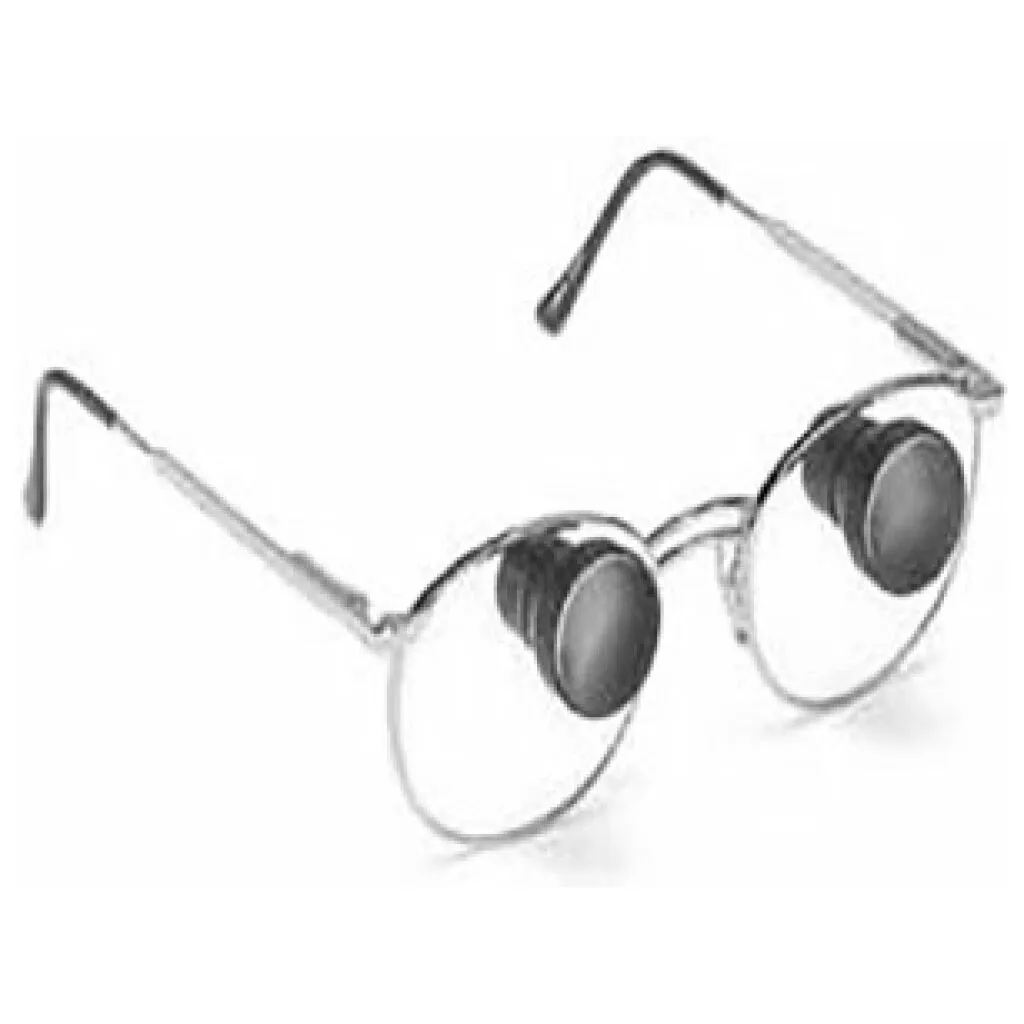
Bioptic telescopes are what are used for driving, the optics of these low vision aids are miniaturized to fit in the top of a pair of glasses. The head is tilted down to view or spot things through them and then returns to the main lens for normal function. Because the telescope sits above the line of sight and is used only for brief spotting glances, most users adapt without the motion discomfort full-field telescopes cause. As of the August 2025 state-regulation compilation, about 45 states plus the District of Columbia permit driving with a bioptic telescope under defined conditions – commonly a through-the-telescope acuity of 20/40 or better, carrier-lens acuity requirements between roughly 20/60 and 20/200, and restrictions such as daytime-only driving; a handful of states (including Arkansas, Iowa, Kansas, Nebraska, and Wyoming) still prohibit bioptic driving entirely [21]. Requirements change, so confirm with your state DMV and complete a certified bioptic driver training program. In those states that they aren't allowed for driving they are still great for everyday use for spotting and details in the distance without having to take them off to move around.
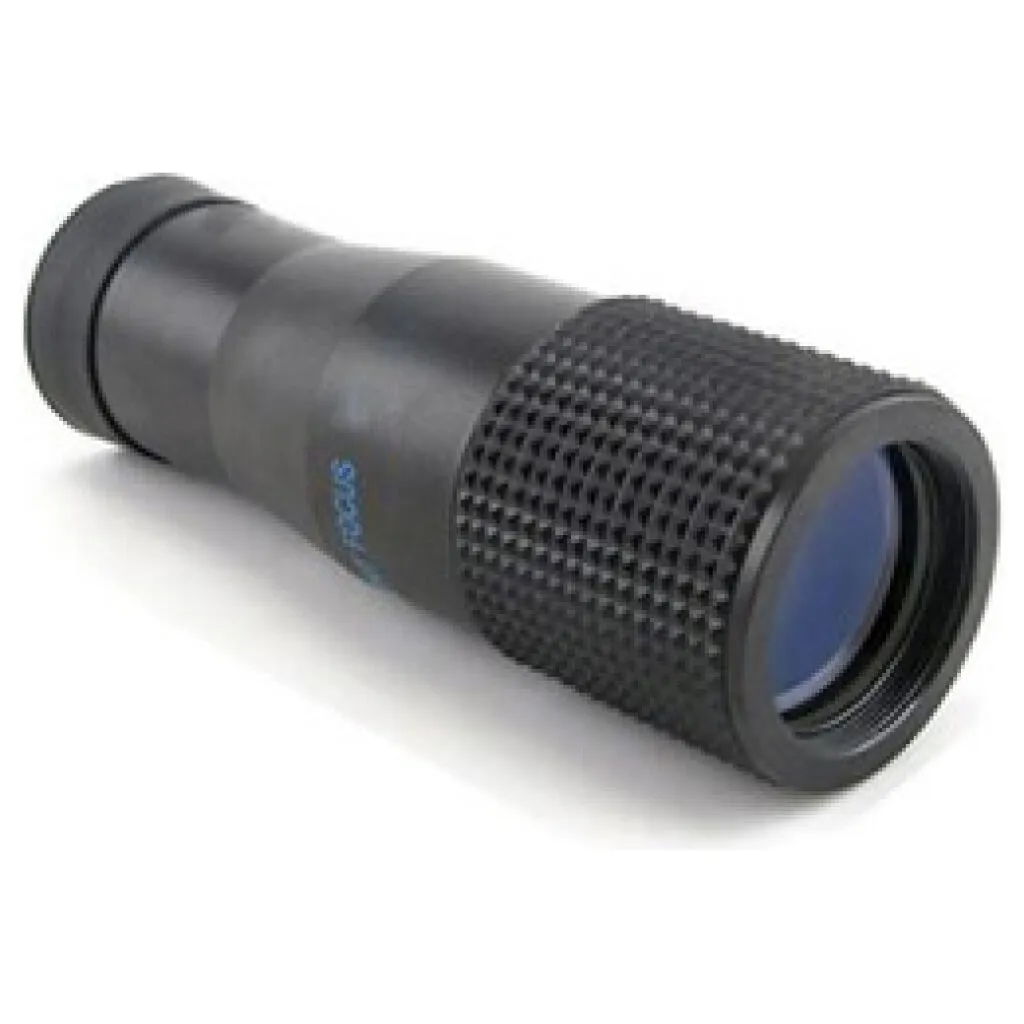
Telescope low vision aids are handheld spotting scopes. They are usually monocular and can be fixed focused, autofocused, or focusable. These are more cumbersome than the spectacle mounted telescopes but offer more versatility of range and magnification. These can be great for kids just learning how to use the telescopes and getting accustomed to their uses and functions. Once used to them it will be easier to move to a spectacle mounted telescope. A handheld 4x monocular is also the cheapest way to read street signs, bus numbers, and whiteboards, which is why it is a staple prescription for school-age children with albinism or optic nerve hypoplasia.
Low vision telescopes come in two optical designs. Galilean telescopes (convex objective, concave eyepiece) are shorter, lighter, and cheaper, but have a narrower field and dimmer image at higher powers; Keplerian telescopes (two convex lens systems with an erecting prism) are bulkier and costlier but deliver roughly twice the field of view and a brighter image at equal magnification – a 3x Galilean gives about an 8-degree field versus 12-15 degrees for a 3x Keplerian [22]. Below about 3x, Galilean designs are usually the sensible choice; at 4x and above, Keplerian optics generally win.
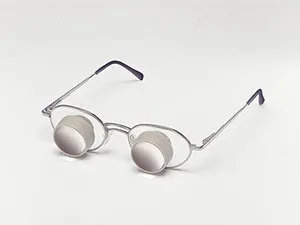
Full field telescopes glasses offer a large field of view and are mounted straight in front of the eyes for activities such as TV viewing or playing cards. They can also be converged and the focal point set for reading or near work. These can also be a complete low vision system, with the addition of lens caps that fit on the end of the telescope glasses, they can be focused at multiple distances for intermediate or near use. Full field telescopes are usually used in stationary situations. They are difficult to move around with them on because they have a tendency to make the user dizzy. The disorientation is expected physics, not a defect: magnifying the whole visual field amplifies apparent motion with every head turn, so full-field designs are prescribed for seated tasks and bioptic designs for mobility.
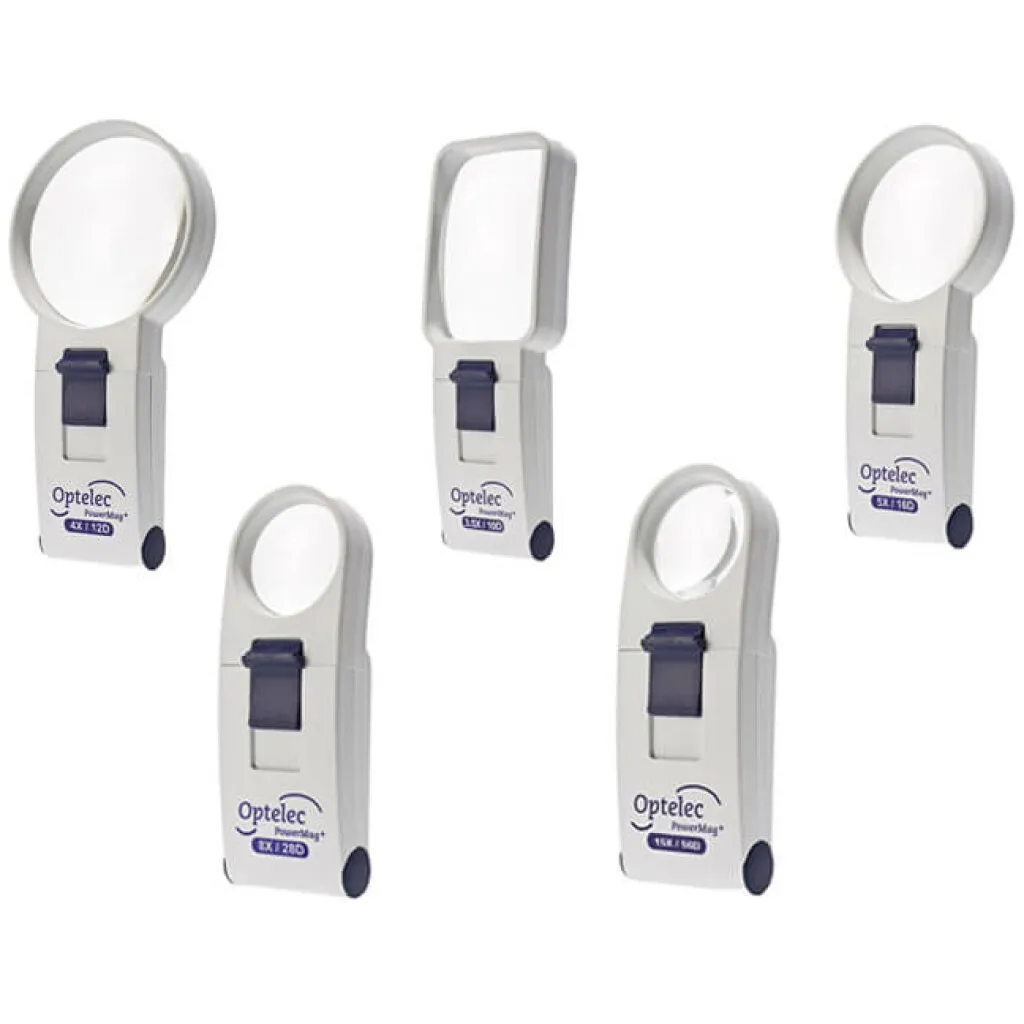
Handheld magnifiers come in a variety of sizes, powers and lighted and unlighted versions. They are simply high-plus convex lenses held between the eye and the page. The stronger the power the more magnification but this also reduces the field of view, meaning you see less content. For example, a 4x magnifier (about +16 D) magnifies twice as much as a 2x (about +8 D), but it must sit about half as far from the page – roughly 6 cm instead of 12.5 cm from the print – and shows about half as much text at once: where a 2x lens might frame three or four words, a 4x frames one or two. That is why we prescribe the lowest power that achieves your reading goal [9,10]. These come either lighted or non lighted and even have wireless charging docks for the lighted versions.
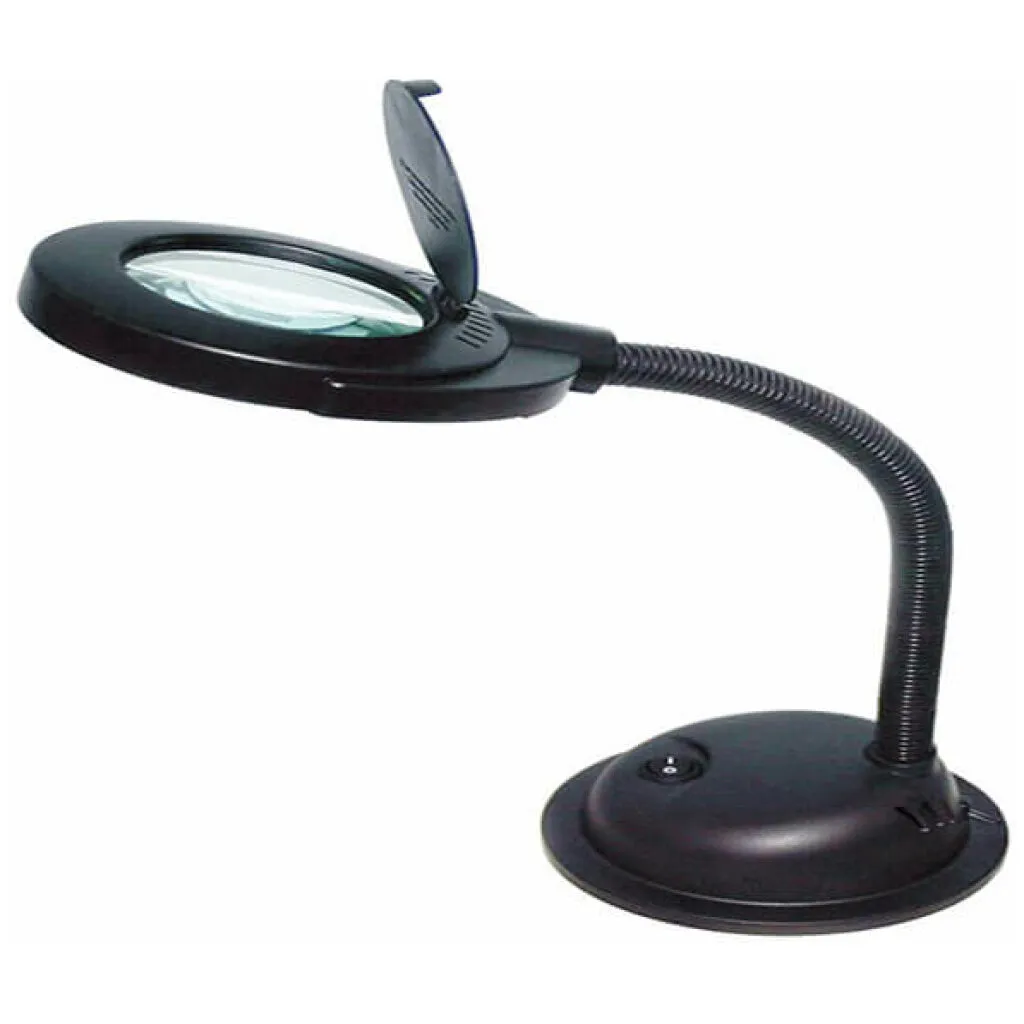
Stand Magnifiers also have plus (convex) lenses in them and are mounted in a rigid frame or stand for placing on a table or bench. This allows for hands-free, pre-focused functionality, which makes them the most forgiving optical aid for tremor, arthritis, and fatigue. They are used for reading, writing, or any hobbies or near tasks that can be done at a table. These low vision aids are great for paying bills, needle work, model making etc. Most stand magnifiers come illuminated but can also be ordered without illumination. They are great low vision aids for children because they don't require them to hold them like hand held magnifiers and the reading material doesn't have to be held super close as with microscope glasses. Dome (paperweight) and bar magnifiers are related stand-type options that rest directly on the page, gather light, and hold the line for beginning readers.
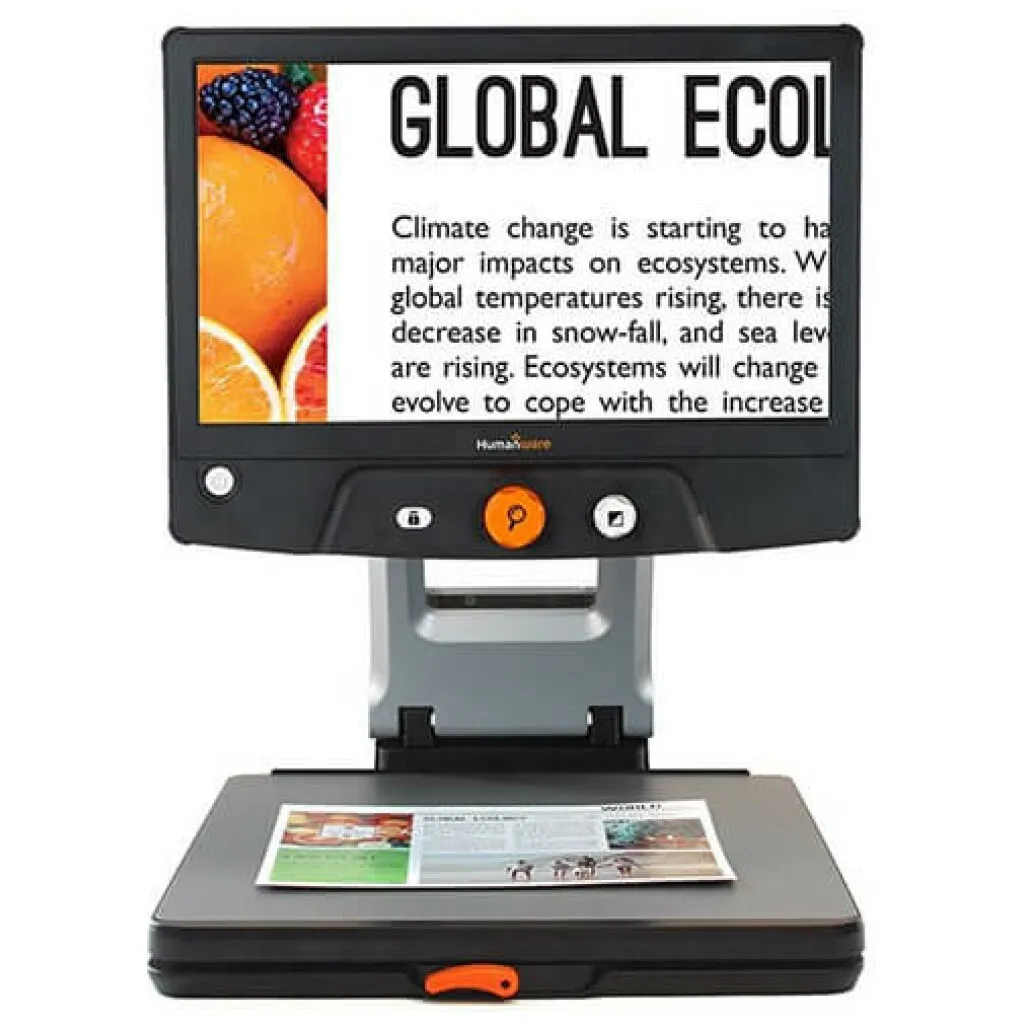
Electronic Magnifiers include things like closed circuit televisions, video magnifiers – both desktop units and pocket-sized portables – and reading machines that photograph a page and read it aloud with optical character recognition (OCR). They offer what optics cannot: magnification beyond about 10x with a normal working distance, adjustable contrast polarity, and speech output. For computer and phone access, the current tools are screen magnification software (ZoomText, Windows Magnifier, macOS Zoom), screen readers (JAWS, the free NVDA, Windows Narrator, Apple VoiceOver, Android TalkBack), and built-in large-text and dark-mode settings on every modern device [23]. Computer tablets with the feature of being able to enlarge print has also made them an invaluable low vision aid. Electronic devices are great options when considering low vision aids for children. Children are fast learners and adapt well to new low vision devices especially electronics.
Visit our online store to find the best low vision device for your individual needs.
Head-worn electronic aids suit people with advanced central vision loss who want one device across many tasks. The market has turned over completely since this page was first written: the current options include eSight Go (Gentex, released 2024) [17], Vision Buddy V4 for television-centered use [16], IrisVision Vista (IrisVision now operates as a Skipfour product) [24], OrCam MyEye 3 Pro for camera-to-speech reading, and Envision Glasses with AI scene description. Before buying any of them, try the free option: Microsoft's Seeing AI app turns an ordinary smartphone into an OCR reader, barcode scanner, and scene describer at no cost [25]. The advantages of these, some offer autofocus, larger fields of view compared to optical low vision devices, audible text reading, virtual reality movie viewing and many other high tech features. The disadvantages are size, they tend to be quite bulky, technically challenging for the elderly and expensive. Head-worn video magnification also reads more slowly than stand-mounted electronic magnifiers in comparative studies [12], so a wearable complements, rather than replaces, a desktop reading system.
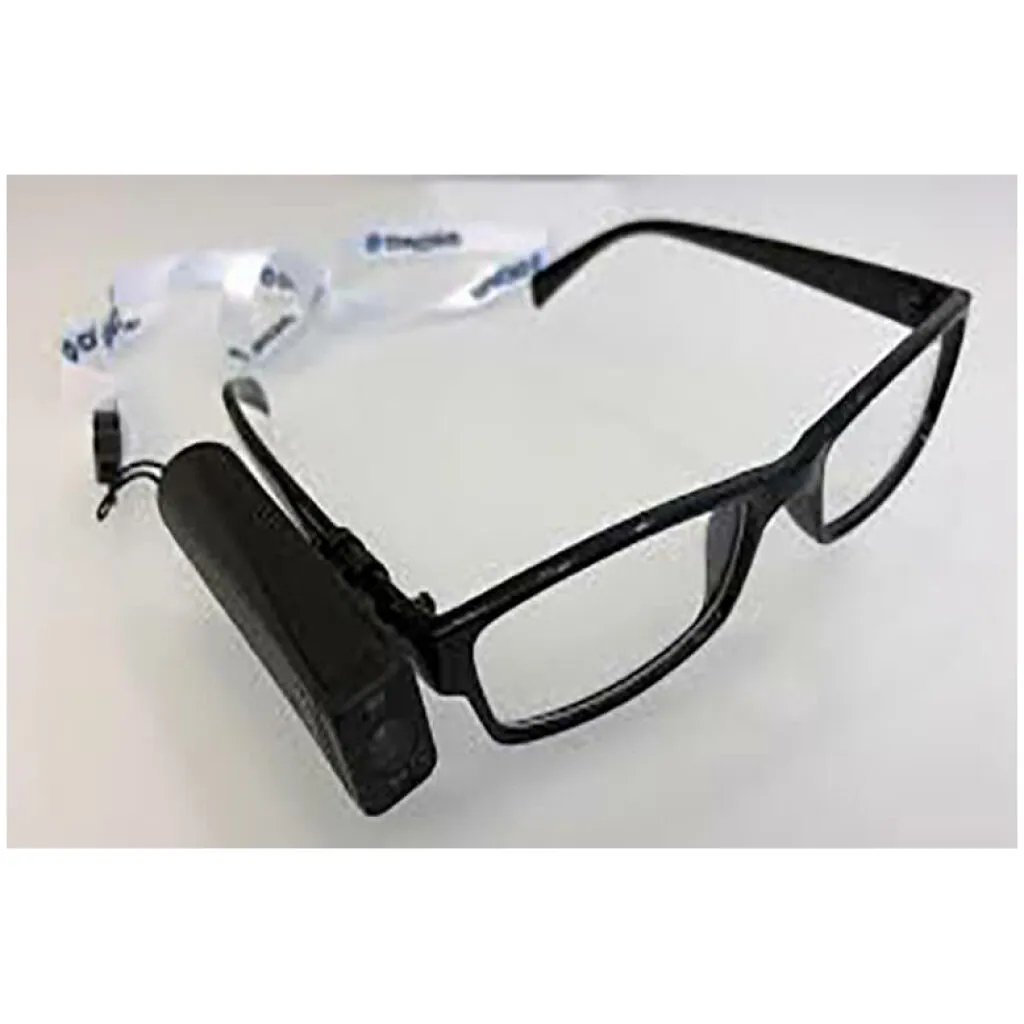
One non optical electronic device is called the Orcam. The Orcam is a vision aid for the blind, it reads text, recognizes faces, identifies barcodes, recognizes money, products and colors. This is a voice activated device that uses artificial intelligence and attaches to any pair of glasses. It quickly can read text from your phone or a book, it stores faces for recall later and can help you maintain your independence by helping you to shop on your own and continue to live an independent life. The current model is the OrCam MyEye 3 Pro, a finger-sized camera that clips magnetically to any frame and works fully offline – a real advantage for privacy and for use without Wi-Fi. Because it substitutes speech for sight rather than magnifying, it serves people whose acuity is too poor for magnification, including profound vision loss and blindness [26].
Book holders to hold your book in the optimum position to use your other optical low vision aids.
Book lights to provide good lighting and contrast for reading and writing. Lighting is the cheapest magnifier there is: adults over 55 need several times the light younger adults need, and studies of task lighting in low vision show reading speed gains averaging around 37 words per minute simply from a properly positioned lamp; aim for roughly 1,000-2,000 lux at the page – an adjustable-arm LED lamp about 30 cm from the material – directed from the side of the better eye [27,28].
Book readers, these devices play all your favorite audiobooks.
Reading machines will read text out loud for those visually impaired or blind. Some are stand alone solutions and some are computer based.
Some use a camera and artificial intelligence to read the text and some use a scanner. They're capable of reading newspapers, books and mail.
Writing guides are helpful low vision aids, these are plastic or metal guides used to show where to write things such as checks and envelopes and come in personal and business styles.
Typoscopes and bold-line paper. A typoscope is a matte-black card with a rectangular window that isolates one line of print, cutting page glare and keeping your place across a scotoma; paired with bold-line paper and a 20/20 felt-tip pen, it keeps handwriting legible.
Large print. True large print is 18-point type or larger in a bold sans-serif font on matte paper – smaller 'enlarged' print does not qualify – per American Printing House for the Blind guidelines [29].
Talking devices. Talking watches, clocks, glucometers, blood pressure monitors, and kitchen scales replace vision entirely for high-stakes tasks such as medication and diabetes management.
Success with an optical aid depends on more than visual acuity: contrast sensitivity, the size and location of any central scotoma, lighting, hand steadiness, cognition, and – above all – motivation and training all predict outcomes [8]. Conventional optical aids are most successful when acuity is roughly 20/200 or better; below that, electronic magnification and speech-based tools carry more of the load, though there is no rigid cutoff and the AAO guideline emphasizes individualized goals over thresholds [8]. If a lot of magnification is needed a low vision system like a telescope is recommended with the minimum required power to keep the maximum field of view. The field of view will have a great influence on successful adaptation to the telescope. For conditions where the central vision is compromised oftentimes the patient will need to be trained how to use the technique of eccentric viewing. Where eccentric viewing training is offered, it is best taught before the telescope is dispensed – but note the evidence above that formal training programs have not consistently outperformed device provision alone in randomized testing [13,14].
Low vision aids for near vision should be used when the object is having to be held too close or when the patient has to accommodate too much (focus). In young children with acuity around 20/200 or better, simply letting the child hold material close is standard practice through the early school years, because a child's enormous accommodative reserve is itself a magnifier. From roughly second grade onward – as print shrinks and reading demand climbs – stand magnifiers, handheld magnifiers, electronic magnifiers, or microscope spectacles are introduced, and earlier when acuity is worse than 20/200. When acuity reaches the 20/800-or-worse range, print reading becomes inefficient even with strong magnification, and a learning-media assessment should weigh braille plus speech-output technology; in practice this decision is individualized by the child's educational team rather than set by a single acuity number [8,30].
Low vision rehabilitation is one of the better-evidenced corners of eye care, and it is worth being precise about what the trials show. The VA's LOVIT randomized trial gave legally blind veterans a full rehabilitation program (devices plus therapy) and found very large gains versus a waiting list: visual reading ability improved by 2.43 logits with an effect size of 2.51, with significant gains in mobility, visual information processing, and overall visual function [31]. LOVIT II, in 323 veterans with milder loss (20/50-20/200), found that devices alone helped, and adding therapist-delivered rehabilitation produced extra benefit mainly for those with acuity worse than 20/63 [32]. The Cochrane review supports stand-mounted electronic magnifiers for reading speed but finds insufficient evidence to crown any single device type overall [12]. What the evidence does not support: claims that any aid restores vision, slows disease, or that blue-blocking tints protect the macula [20]. Aids compensate; medical treatment of the underlying disease is separate and belongs with your ophthalmologist.
See a low vision specialist when vision loss starts costing you tasks – reading mail, recognizing faces, managing medications, driving – despite updated glasses; after any diagnosis of AMD, glaucoma, diabetic retinopathy, or inherited retinal disease with best-corrected acuity of 20/70 or worse; when a child with visual impairment starts or changes schools; and before buying any device costing more than a basic magnifier, because the wrong power is the most common reason aids end up in drawers. Referral to vision rehabilitation is the professional standard of care for uncorrectable vision loss [8]. Seek urgent ophthalmic care – not a device – for any sudden change: new distortion or a dark patch (possible wet AMD), a curtain or shower of floaters (possible retinal detachment), or eye pain with halos (possible angle closure). Use our low vision specialist directory to find an in-person evaluation near you.
Plan for out-of-pocket costs. Under CMS's 2008 interpretation of the statutory eyeglass exclusion, Medicare excludes from coverage all devices that use one or more lenses to aid vision or magnify images, irrespective of their size, form, or technological features – which sweeps in optical magnifiers, video magnifiers, and head-worn devices alike [33]. The low vision evaluation itself, and rehabilitation training furnished incident to a physician's plan of care, are generally covered services; only the hardware is excluded. Bills to create a Medicare demonstration of low vision device coverage have been introduced in every Congress since 2013 without passage, so as of 2026 no demonstration is running [34]. Alternatives that do pay for devices: state vocational rehabilitation agencies (when the device supports employment), the VA for eligible veterans (the most comprehensive coverage in the country), state assistive-technology loan programs, school systems under IDEA for children, and charitable programs such as Lions Clubs.
Usually not. Medicare's low vision aid exclusion bars coverage of magnifying devices, though exam and training services are covered [33]. Some Medicare Advantage plans, state programs, the VA, and vocational rehabilitation agencies do help – ask before you buy.
A low vision specialist is an optometrist or ophthalmologist with additional training in vision rehabilitation who performs the extended functional evaluation described above – logMAR acuity, contrast sensitivity, scotoma mapping, and device trials – and coordinates occupational therapy and orientation and mobility services. Your regular eye doctor manages the disease; the specialist maximizes the remaining vision [8].
No. Aids enlarge, relocate, or re-code the image so healthy retina and other senses can use it; they do not change the underlying disease. Randomized trials show they substantially improve reading and daily function [31,32], which is a different – and still valuable – claim.
There is no single winner. For sustained reading, evidence favors a stand-mounted electronic (video) magnifier [12]; for portability, a lighted handheld magnifier in the correct power; for television, a streaming headset such as Vision Buddy; for hands-free near work, high-add or prismatic spectacles. Most AMD patients do best with two or three complementary aids plus proper lighting.
Children accommodate powerfully, so simply holding things close works well in the early years; devices are layered in as school print shrinks. Handheld monoculars for the board, stand magnifiers and tablets for near work, and a learning-media assessment to decide print versus braille are the staples, coordinated with the school's teacher of the visually impaired [8,30].
In about 45 states plus DC, yes – within defined acuity limits and often with restrictions such as daytime-only driving, and typically after formal bioptic driver training; a few states still prohibit it [21]. Your low vision specialist can tell you your state's exact thresholds and refer you to a certified driving rehabilitation program.
Visit our online store to find the best low vision device for your individual needs. If you are not sure where to start, book a low vision evaluation first - the exam determines the power, and the power determines the device.
This page is for educational purposes and does not replace an examination by an eye care professional. Device candidacy, magnification power, and driving eligibility can only be determined through an in-person low vision evaluation. If you experience a sudden change in vision, seek ophthalmic care immediately.
1. National Eye Institute. Low Vision. NIH. https://www.nei.nih.gov/learn-about-eye-health/eye-conditions-and-diseases/low-vision
2. World Health Organization. ICD-11 for Mortality and Morbidity Statistics: Vision impairment including blindness (9D90); and WHO. World Report on Vision. Geneva: WHO; 2019. https://www.who.int/publications/i/item/9789241516570
3. Rein DB, Wittenborn JS, Burke-Conte Z, et al. Prevalence of Visual Acuity Loss or Blindness in the US: A Bayesian Meta-analysis. JAMA Ophthalmol. 2021;139(7):717-723. doi:10.1001/jamaophthalmol.2021.0527
4. Varma R, Vajaranant TS, Burkemper B, et al. Visual Impairment and Blindness in Adults in the United States: Demographic and Geographic Variations From 2015 to 2050. JAMA Ophthalmol. 2016;134(7):802-809. doi:10.1001/jamaophthalmol.2016.1284
5. Rein DB, Wittenborn JS, Burke-Conte Z, et al. Prevalence of Age-Related Macular Degeneration in the US in 2019. JAMA Ophthalmol. 2022;140(12):1202-1208. doi:10.1001/jamaophthalmol.2022.4401
6. Lundeen EA, Burke-Conte Z, Rein DB, et al. Prevalence of Diabetic Retinopathy in the US in 2021. JAMA Ophthalmol. 2023;141(8):747-754. doi:10.1001/jamaophthalmol.2023.2289
7. Ehrlich JR, Burke-Conte Z, Wittenborn JS, et al. Prevalence of Glaucoma Among US Adults in 2022. JAMA Ophthalmol. 2024;142(6):509-518. https://jamanetwork.com/journals/jamaophthalmology
8. American Academy of Ophthalmology Preferred Practice Pattern Committee. Vision Rehabilitation Preferred Practice Pattern. Ophthalmology. 2023;130(3):P271-P335. https://www.aao.org/education/preferred-practice-pattern/vision-rehabilitation-ppp-2022
9. American Academy of Ophthalmology. Basic and Clinical Science Course, Section 3: Clinical Optics and Vision Rehabilitation (Kestenbaum's rule; magnifier ratings). AAO; 2024-2025 edition. https://www.aao.org/education/bcscsnippetdetail.aspx?id=a59f0550-3fe3-4715-aaa6-00ba47713dd4
10. Whittaker SG, Lovie-Kitchin J. Visual requirements for reading. Optom Vis Sci. 1993;70(1):54-65. doi:10.1097/00006324-199301000-00010
11. Reading Assessment and Eye Movement Analysis in Bilateral Central Scotoma Due to Age-Related Macular Degeneration. J Eye Mov Res. 2025;18(5):38. doi:10.3390/jemr18050038
12. Virgili G, Acosta R, Bentley SA, Giacomelli G, Allcock C, Evans JR. Reading aids for adults with low vision. Cochrane Database Syst Rev. 2018;4:CD003303. doi:10.1002/14651858.CD003303.pub4
13. Hong SP, Park H, Kwon JS, Yoo E. Effectiveness of eccentric viewing training for daily visual activities for individuals with age-related macular degeneration: a systematic review and meta-analysis. NeuroRehabilitation. 2014;34(3). doi:10.3233/NRE-141055
14. Rubin GS, Crossland MD, Dunbar HMP, et al. Eccentric Viewing Training for Age-Related Macular Disease: Results of a Randomized Controlled Trial (the EFFECT Study). Ophthalmol Sci. 2023;4(2):100422. doi:10.1016/j.xops.2023.100422
15. Bowers AR, Keeney K, Peli E. Randomized crossover clinical trial of real and sham peripheral prism glasses for hemianopia. JAMA Ophthalmol. 2014;132(2):214-222. doi:10.1001/jamaophthalmol.2013.5636
16. Vision Buddy. Vision Buddy – Television Watching System for the Visually Impaired (V4 product specifications). https://visionbuddy.com/
17. eSight by Gentex Corporation. eSight Go product page and FAQ. https://www.esighteyewear.com/esight-go/ (Gentex acquisition of eSight assets announced January 2024)
18. Blackburn MK, Lamb RD, Digre KB, et al. FL-41 tint improves blink frequency, light sensitivity, and functional limitations in patients with benign essential blepharospasm. Ophthalmology. 2009;116(5):997-1001. doi:10.1016/j.ophtha.2008.12.031
19. Good PA, Taylor RH, Mortimer MJ. The use of tinted glasses in childhood migraine. Headache. 1991;31(8):533-536. PMID: 1960058
20. Singh S, Keller PR, Busija L, et al. Blue-light filtering spectacle lenses for visual performance, sleep, and macular health in adults. Cochrane Database Syst Rev. 2023;8:CD013244. doi:10.1002/14651858.CD013244.pub2
21. Ocutech Inc. US State Bioptic Driving Regulations – Current as of August 2025. https://ocutech.com/wp-content/uploads/2026/01/Bioptic-Driving-Regulations-by-State-08-2025-v3.pdf
22. Ocutech Inc. Understanding Galilean vs. Keplerian vs. Wide Angle Telescope Designs. 2025. https://ocutech.com/wp-content/uploads/2025/04/Understanding-Gal-vs-Kepl-vs-WideField-vs-Expanded-Field.pdf
23. American Academy of Ophthalmology. Recommendations on Assistive Technology for Patients with Low Vision – 2025 Clinical Statement. https://www.aao.org/education/clinical-statement/recommendations-on-assistive-technology-patients-w
24. IrisVision (a Skipfour product). IrisVision Vista product and company pages. https://irisvision.com/
25. Microsoft. Seeing AI – A Visual Assistant for the Blind (free; iOS and Android). https://www.seeingai.com/
26. OrCam Technologies. OrCam MyEye 3 Pro product specifications. https://www.orcam.com/
27. Brunnstrom G, Sorensen S, Alsterstad K, Sjostrand J. Quality of light and quality of life – the effect of lighting adaptation among people with low vision. Ophthalmic Physiol Opt. 2004;24(4):274-280. doi:10.1111/j.1475-1313.2004.00192.x
28. New insights into visually impaired patients' preferred reading illumination and home-based reading speed with new task-lighting. 2023. PubMed PMID: 36806302. https://pubmed.ncbi.nlm.nih.gov/36806302/
29. Kitchel JE. Research-Based Guidelines for the Development of Documents in Large Print. American Printing House for the Blind. https://media.aph.org/app/uploads/2022/04/Research-Based-Large-Print-Guidelines.pdf
30. American Academy of Ophthalmology. Low Vision and Vision Rehabilitation (SmartSight patient resources and pediatric guidance). https://www.aao.org/education/low-vision-and-vision-rehab
31. Stelmack JA, Tang XC, Reda DJ, Rinne S, Mancil RM, Massof RW; LOVIT Study Group. Outcomes of the Veterans Affairs Low Vision Intervention Trial (LOVIT). Arch Ophthalmol. 2008;126(5):608-617. doi:10.1001/archopht.126.5.608
32. Stelmack JA, Tang XC, Wei Y, et al. Outcomes of the Veterans Affairs Low Vision Intervention Trial II (LOVIT II): A Randomized Clinical Trial. JAMA Ophthalmol. 2017;135(2):96-104. doi:10.1001/jamaophthalmol.2016.4742
33. American Foundation for the Blind. Low Vision Aid Exclusion (CMS 2008 DMEPOS rule interpreting the Medicare eyeglass exclusion). https://www.afb.org/blindness-and-low-vision/your-rights/medicare-medicaid-and-social-security/low-vision-aid-exclusion
34. US Congress. H.R.6848 – Medicare Demonstration of Coverage for Low Vision Devices Act of 2022 (117th Congress; not enacted; successor bills pending). https://www.congress.gov/bill/117th-congress/house-bill/6848

 Shop Best Low-Vision Aids with FREE Doctor Consultation.Yes! Let's Go

Find out for yourself if you are a candidate for MaculaRevive
Start Now