IRISVISION

Medically reviewed by Shaun Larsen, OD – Doctor of Optometry. Low vision rehabilitation specialist.

Last clinically reviewed: August 2026 | Next scheduled review: August 2027 | Reading time: 11 minutes

Editorial standard: every clinical and product claim in this article is sourced to a peer-reviewed journal, a national eye institute, a professional society, or the manufacturer's own current published materials, cited by number in the reference list at the end.

IrisVision was one of the first widely sold VR-style electronic magnification headsets for people with low vision. The product line has changed substantially since this page was first published, so this article now covers three things: what IrisVision is today, what the peer-reviewed evidence says head-mounted vision devices can and cannot do, and which alternatives are worth considering in 2026.

irisvision

Product status at a glance (verified August 2026)

IrisVision Live / Live 2.0: sales discontinued (announced March 2024). The company states existing devices keep working and that it will continue to honor warranties and support obligations [6].

IrisVision Inspire: no longer listed on the manufacturer's product or pricing pages; only archived support documentation remains. Treat it as discontinued for new purchases, though some third-party dealers may still hold stock [6,7].

IrisVision Vista: the current and only headset, sold at $3,299 with an optional Vision Cast TV-streaming accessory at $649. The vendor describes Vista as the successor to Live 2.0 and markets it as a voice-first device with an AI assistant ('Iris') and up to 14x zoom [6,7].

Company: IrisVision now operates as 'a Skipfour product' following a corporate restructuring; the brand, support lines, and software platform continue [7].

About IRISVISION

IrisVision is a head-worn electronic magnification system: a smartphone-class camera and processor capture the scene in front of you and redisplay it, magnified and enhanced, on screens a few centimeters from your eyes. It has an unusually strong scientific pedigree for a consumer device. The underlying system was invented by Dr. Frank Werblin, a retinal neuroscientist at UC Berkeley, developed with funding from the National Eye Institute (NIH), and clinically evaluated at the Johns Hopkins Wilmer Eye Institute's low vision rehabilitation center [4,5]. The first commercial version shipped in 2017, followed by the Live 2.0 and the lighter Inspire headset (2021), both of which have since been retired in favor of the current Vista model [6,8].

How VR-style magnification headsets actually work

All devices in this category share one architecture: a forward-facing camera feeds live video to a processor, which redraws the image on one small high-resolution display per eye. Because the image is digital before you see it, software can transform it in ways optics cannot. The three transformations that matter clinically are magnification (enlarging the image so it spans more surviving retina), contrast enhancement (stretching the difference between light and dark, which helps because contrast sensitivity is often reduced out of proportion to acuity in macular disease), and edge enhancement (outlining object borders to make faces, curbs, and print boundaries easier to find) [1].

IrisVision's signature contribution was the 'bubble view' remapping strategy: instead of magnifying the whole scene – which shrinks your effective field of view and makes it easy to get lost in the image – the software magnifies only a movable region of interest inside an unmagnified surround, so you keep scene context while inspecting detail [1,4]. This kind of patient-customized image remapping is exactly what the research groups behind these devices identify as the field's most important open problem [1].

What the peer-reviewed evidence shows – and what it does not

Head-mounted display systems have real, measured benefits for seated, visually demanding tasks. In the largest prospective study of this device class, 51 participants with stable low vision (acuity 20/60 to 20/400) tested across six US and Canadian sites gained an average of 0.74 logMAR of distance acuity (roughly seven lines on the chart), 0.57 log units of contrast sensitivity, and 0.52 logMAR of critical print size the moment the device was fitted, with gains maintained at three months [2]. A 2025 comparison of three commercial augmented-reality devices found that head-mounted models – IrisVision among them – significantly improved distance and near acuity and contrast sensitivity, while a lighter spectacle-style model did not [3].

The limitations are just as well documented, and an honest seller should say them plainly. First, field of view: every headset narrows it, and in the 2025 study participants using all three devices missed more head-level obstacles during indoor navigation, which is why these devices are not recommended as mobility aids – they are for looking, not walking [3]. Second, motion: when the image is magnified, every head movement is magnified with it, and the vestibulo-ocular reflex cannot compensate, producing blur and, in some users, motion sickness (vection) at high zoom [1]. Third, for many everyday tasks, conventional optical aids – strong reading glasses, handheld and stand magnifiers, bioptic telescopes – remain faster, cheaper, and easier [1].

The current model: IrisVision Vista

The Vista is IrisVision's only current headset. Verified against the manufacturer's site in August 2026 [6,7]:

Price: $3,299, with financing available through Affirm, Klarna, or Afterpay; an optional Vision Cast accessory for streaming TV into the headset costs $649 [7].

Magnification: up to 14x zoom, with contrast adjustment and multiple vision modes [7].

Voice-first control: an onboard AI assistant ('Iris') executes commands – read text aloud, zoom, change modes, adjust brightness – hands-free, in roughly a dozen languages [7].

Lineage: the vendor states Vista 'was previously Live 2.0,' i.e., it is the continuation of the phone-in-headset platform this page originally described [6].

The Irisvision Live

The IrisVision Live is no longer available. IrisVision announced in March 2024 that it had discontinued sales of the Live 2.0 product line. If you already own one: the company states that existing devices will continue to function and that it will continue to honor warranties and support obligations under the device's terms and conditions [6]. Owners with support questions should contact IrisVision customer care directly rather than relying on dated third-party pages – including the earlier version of this one.

Ease of Use

Voice control has always been the platform's strongest usability feature, and the current Vista doubles down on it: commands such as switching between reading and distance modes, zooming in or out, and reducing brightness are spoken rather than fumbled for on a controller, which matters for users who cannot see small buttons [7].

The manufacturer specifies up to 14x magnification and has historically quoted a 70-degree field of view – wide for this device class, though 'industry-leading' and 'largest available' are marketing language we cannot verify, and even a 70-degree window is far narrower than natural vision [1,7]. In practice the headset suits seated and stationary activities: reading, writing, hobbies at arm's length, watching TV or a stage or a ballgame, and video calls. It is not a mobility aid. Published navigation testing shows headset users miss more obstacles, and no device in this category should be relied on while walking in unfamiliar or hazardous environments [1,3].

Connectivity, remote support, and telehealth-style coaching remain part of the platform's pitch, but the specific bundled-cellular-data offer described here belonged to the discontinued Inspire; confirm current connectivity terms with the vendor before purchase [6,7].

Costs

Current pricing (August 2026): the IrisVision Vista costs $3,299 direct from the manufacturer, with free US shipping and installment financing through Affirm, Klarna, or Afterpay; the optional Vision Cast TV accessory is $649 [7]. The prices previously listed on this page – $3,995 for the Inspire and $2,995 for the Live – are for discontinued products and no longer apply.

Warranty and trial terms are set by the manufacturer and have changed across product generations; review IrisVision's current warranty and returns policy at the point of sale rather than relying on any summary here [7].

The company offers free remote support and software updates along with one-on-one coaching. The current Vista ships with its display, charger, and remote in the box [7].

The best IrisVision alternatives in 2026

Because the Live and Inspire are gone and the Vista is a single option at one price point, anyone shopping this category in 2026 should compare across the field. Verified pricing as of August 2026:

eSight Go – $4,950. The lightest full-function magnification wearable from the other long-standing clinical brand; eSight's platform has the strongest peer-reviewed evidence base in the category [2], and the company offers a 7-day home trial for $250 (credited toward purchase). Frequently covered by the VA for eligible veterans [9,14].

Vision Buddy V4 – $2,995 (Viewer) / $3,995 (Max). A television-first headset: it plugs into your TV source and streams the picture directly into the headset, with camera modes for reading and distance. The maker targets acuities of roughly 20/100 to 20/800 and offers a 14-day trial ($100 fee plus refundable deposit) [10].

OrCam MyEye 3 Pro – about $4,490. Not a magnifier at all: a finger-sized camera that clips to your own glasses and speaks – reading text aloud, recognizing faces and products. The right tool when magnification no longer works, i.e., for later-stage vision loss [11].

Envision Ally Solos glasses – $699 (launched at $399-$599 preorder pricing in late 2025). Camera-equipped audio smart glasses with an AI assistant that describes scenes and reads text. Like OrCam, these are speech-out rather than magnification devices, at a fraction of the price [12].

Eschenbach SmartLux Digital – about $845. A reminder that a wearable is not the only answer: this 5-inch handheld video magnifier (3x-15x, multiple contrast modes) handles most reading tasks for a fifth of the cost of a headset, with nothing on your face [17]. Browse our full range of link: /low-vision-aids-devices-products/ low vision devices, including CCTVs, wearable electronic magnifiers, and handheld video magnifiers.

Your smartphone – free. Honest advice we give every patient: before spending thousands, exhaust the accessibility tools you already own. The iPhone's built-in Magnifier app offers live magnification, contrast filters, freeze-frame, and scene description; Android's free Magnifier app and built-in accessibility zoom do the same [16]. For early or moderate vision loss, a phone plus good lighting often outperforms an unused $3,000 headset.

Paying for a headset: insurance, VA, and other funding

Medicare does not cover these devices – not for lack of medical value, but because CMS treats every device that uses a lens to aid vision or magnify images under the statutory eyeglass exclusion, even when prescribed by a physician [13]. Some Medicare Advantage plans add limited vision-device benefits; read the specific plan. Four routes are worth pursuing: (1) the VA – veterans enrolled in VA healthcare can be evaluated through a Visual Impairment Services Team (VIST) coordinator or a blind rehabilitation center, and the VA does provide head-mounted displays, including eSight devices, at no cost to qualifying veterans [14]; (2) state assistive-technology (AT Act) programs, which run free device demonstration and loan libraries plus low-interest financing; (3) state vocational rehabilitation agencies, for devices needed for work or education; and (4) charitable grants such as Lions Clubs programs. A low vision specialist can point you to the programs active in your state.

FAQ's

1. Does insurance cover the Irisvision?

Most insurance companies don't cover this device; however, some grants and financing may be available. Specifically: Medicare excludes low vision aids by statute [13], and private plans almost always follow suit. The realistic funding paths are the VA for eligible veterans [14], state assistive-technology and vocational rehabilitation programs, charitable grants, and the manufacturer's installment financing [7].

2. “Can I drive with the Irisvision?”

No – and not merely because of limited peripheral vision. No VR-style video headset (IrisVision, eSight, Vision Buddy, or any other) is legal, licensed, or designed to be worn while driving in any US state: you would be driving by camera feed, with latency, a narrowed field, and total dependence on battery and software [1]. The only legally recognized route to driving with low vision is a bioptic telescope – small telescopes mounted on eyeglasses – which roughly 45 states plus DC permit under specific acuity, training, and licensing rules, often with daytime or route restrictions [15]. If driving is your goal, ask about a bioptic evaluation, not a headset.

3. Will I be embarrassed to wear this?

All devices in this class look like tech, not eyewear – the current Vista included. Most users decide within days that the recovered function outweighs the look; if discretion is the priority, glasses-style audio devices (OrCam, Ally Solos) or a pocketable handheld magnifier draw far less attention than any headset [11,12].

4. How long will this last or when will it need to be replaced?

It is an electronic device so care will need to be taken with it. With proper care and software updates, it should last you many years. That said, this product category has a real obsolescence risk, and IrisVision's own history proves it: the Live and Inspire were both discontinued within a few years of launch, and the company itself changed hands [6]. Before buying any headset, ask in writing how long software updates, parts, and repair support are guaranteed for the model you are purchasing.

5. Do I need a prescription for the Irisvision?

You do not need a prescription for the irisvision, however seeing a low vision specialist before purchasing is recommended, they can help you navigate whether the device is right for you and that it will meet your needs and expectations. We would put it more strongly: a low vision evaluation first is the single best predictor of not wasting your money. A specialist will measure your acuity, contrast sensitivity, and visual field, let you trial several device types side by side, and match the tool to your actual tasks – which is sometimes a $3,000 headset and sometimes a $300 magnifier and better lighting [1].

6. Will the IrisVision work for me?

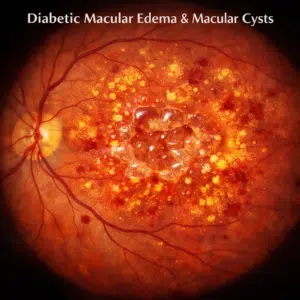
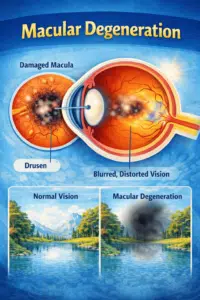
The best evidence for this device class comes from users with best-corrected acuity between roughly 20/60 and 20/400 [2]; vendor materials have historically cited a wider range, up to about 20/800. The conditions that respond best are those with central vision loss and usable peripheral retina: age-related macular degeneration, Stargardt disease, diabetic retinopathy, and albinism. Retinitis pigmentosa is a special case: magnification helps when central acuity is the problem, but in RP with severely constricted fields, magnifying the image pushes what little you see outside your remaining field, and headsets that block peripheral light can worsen orientation – an in-person trial is essential. You also need enough remaining vision to benefit (these devices enhance sight; they do not restore it), steady head control, and the willingness to learn a device [2,3].

7. Can I buy the device for my relative?

Absolutely! Just make sure they are willing and able to learn and use innovative technology. They should be able to use a smartphone efficiently. Better still, arrange a trial before the surprise: manufacturers offer paid home-trial programs (eSight's 7-day trial, Vision Buddy's 14-day trial) [9,10], and state AT programs loan devices free. A headset chosen with the user succeeds far more often than one chosen for them.

8. What is the return and 30-day evaluation policy?

The evaluation program described here applied to the discontinued Live product line and is no longer in effect. Current warranty, trial, and return terms for the Vista are published on IrisVision's warranty and returns page – confirm them at the point of sale, and get any verbal promises in writing [7].

9. Is there any help still available after the coaching?

Yes – IrisVision maintains a help center, training materials, and customer support, including archived support documentation for discontinued Live and Inspire units, and states it will honor existing warranty and support obligations for those devices [6]. The $295 assessment-and-coaching fee described in the earlier version of this answer belonged to the retired sales program and should not be assumed to apply today.

10. How long does the battery last?

The 3-to-4-hour figure was the Inspire's spec, and the Inspire is no longer sold. As a category rule of thumb, full-function magnification headsets run roughly 2 to 4 hours of continuous use and are designed for sessions of activity rather than all-day wear; confirm the current Vista's battery specification with the vendor before purchase [7].

11. How do you charge the Irisvision?

If you own a legacy Inspire or Live unit, follow the charging instructions in IrisVision's help center for your specific model; the vendor keeps user guides and troubleshooting pages online for discontinued hardware [6]. Vista owners should use the charger supplied in the box and the current user guide.

Find a nearby low vision professional

The best way to learn more about low vision aids and pick up the right ones is to visit a low vision professional. It's easy to find one in your area. A proper low vision evaluation - acuity, contrast sensitivity, visual fields, and hands-on trials of devices side by side - is the difference between a tool that changes your daily life and an expensive gadget in a drawer [1]. If you were searching for an IrisVision specifically: the model you read about may no longer be sold, but the task you wanted it for still has a solution, and a specialist can match you to it.

This article is for educational purposes and does not replace an examination by an eye care professional. Device availability, specifications, and prices were verified in August 2026 and may change; confirm current details with manufacturers before purchasing. If you experience a sudden change in vision, new flashes or floaters, or a curtain over your vision, seek eye care urgently.

References

1. Deemer AD, Bradley CK, Ross NC, Natale DM, Itthipanichpong R, Werblin FS, Massof RW. Low vision enhancement with head-mounted video display systems: are we there yet? Optom Vis Sci. 2018;95(9):694-703. doi:10.1097/OPX.0000000000001278

2. Wittich W, Lorenzini MC, Markowitz SN, Tolentino M, Gartner SA, Goldstein JE, Dagnelie G. The effect of a head-mounted low vision device on visual function. Optom Vis Sci. 2018;95(9):774-784. doi:10.1097/OPX.0000000000001262

3. Gopalakrishnan S, Kartha A, Schuchard R, Fletcher D. Comparison of visual function analysis of people with low vision using three different models of augmented reality devices. PLOS ONE. 2025;20(10):e0332085. doi:10.1371/journal.pone.0332085

4. Medgadget. IrisVision for low vision: interview with Ammad Khan, CEO, and Frank Werblin, Chief Scientist and Inventor. March 2018. https://www.medgadget.com/2018/03/irisvision-for-low-vision-interview-with-ammad-khan-ceo-and-frank-werblin-chief-scientist-and-inventor.html

5. ClinicalTrials.gov. Design and clinical evaluation of a smartphone-based low vision enhancement system (NCT03728660). Johns Hopkins University. https://clinicaltrials.gov/study/NCT03728660

6. IrisVision. Live 2.0 product notice (discontinuation of Live 2.0 sales; 'Vista by IrisVision was previously Live 2.0'; warranty and support commitments). https://irisvision.com/live-2-0/. Accessed August 2026.

7. IrisVision (a Skipfour product). Vista product and pricing pages. https://irisvision.com/pricing/ and https://irisvision.com/vista/. Accessed August 2026.

8. American Foundation for the Blind. IrisVision's new addition, Inspire. AccessWorld. February 2023. https://afb.org/aw/february2023/irisvisions-new-addition-inspire

9. eSight Eyewear. eSight Go pricing (MSRP $4,950 USD; home trial program). https://www.esighteyewear.com/esight-go-pricing/. Accessed August 2026.

10. Vision Buddy. VB pricing (VB 4 Viewer $2,995; VB 4 Max $3,995; trial program). https://visionbuddy.com/vb-pricing/. Accessed August 2026.

11. OrCam Technologies. OrCam MyEye 3 Pro product page. https://www.orcam.com/en-us/orcam-myeye-3-pro. Accessed August 2026.

12. Envision. Ally Solos glasses launch announcement and pricing. https://www.letsenvision.com/blog/ally-solos-glasses. 2025. Accessed August 2026.

13. American Foundation for the Blind. Low vision aid exclusion (Medicare). https://www.afb.org/blindness-and-low-vision/your-rights/medicare-medicaid-and-social-security/low-vision-aid-exclusion

14. US Department of Veterans Affairs. Low vision rehabilitation – VA Optometry (prescribed devices include electronic head-mounted displays; VIST coordinators and blind rehabilitation centers). https://www.va.gov/optometry/low_vision_rehabilitation.asp

15. Owsley C. Driving with bioptic telescopes: organizing a research agenda. Optom Vis Sci. 2012;89(9):1249-1256. https://pmc.ncbi.nlm.nih.gov/articles/PMC3471243/

16. Apple Inc. Magnify or describe things around you with Magnifier on iPhone. Apple Support. https://support.apple.com/guide/iphone/magnify-or-describe-things-around-you-iphe867dc99c/ios

17. Eschenbach Optik. Smartlux Digital portable video magnifier (3x-15x); retail listing (MaxiAids, $845). https://eschenbach.com/products/video-magnifiers-hand-held-smartlux-digital.asp. Accessed August 2026.

shop cartShop Best Low-Vision Aids with FREE Doctor Consultation.Yes! Let's Go