Living with changes in vision can feel overwhelming, especially when regular glasses no longer help. Simple tasks like reading a bill, checking a price tag, or recognizing a loved one’s face may become difficult. You are not alone in this experience. Over 12 million Americans age 40 and older live with vision impairment, and many find meaningful support through aids that low vision users rely on for daily tasks. These impaired vision aids can help restore independence and make everyday activities manageable with the right visual aid.
While we can’t always “fix” vision loss, there are powerful aids to help you use the vision you still have. This guide will explain visual aids and walk you through your options, from low vision aids to other tools that can make life easier. Understanding the visual aid definition helps clarify that these tools are designed to enhance remaining vision, not replace it. You don’t have to face this alone; let’s explore how the right visual aids can help you regain confidence and control in your daily life.
What Are Low Vision Aids?
Visual aids definition: Low vision aids are specialized tools that help people with vision loss see better. Unlike standard eyeglasses, these visual aids focus on working with remaining vision to make daily tasks easier, promoting independence and comfort. This clear visual aid definition helps set realistic expectations while highlighting how these tools support daily life. If you’re new to low vision aids, you might ask, what are visual aids?, “What is a visual aid?” These impaired vision aids, such as electronic magnifiers, differ from basic glasses by offering customizable settings to meet your needs.
Understanding visual aids and their purpose is important, whether you need them for reading or for conditions like macular degeneration. Knowing what is a visual aid, means understanding that they won’t cure eye disease, but they can significantly improve your day-to-day life. Think of them as assistants for your eyes, a visual aid or aide designed to support daily life, a practical visual aid definition in action, each visual aid helping you achieve more with ease. Always consult a specialist to find the best options for your lifestyle.
How Do They Help?
- 1. Magnification: They make things look bigger. This helps you see details that are too small for your eyes to catch on their own.
- 2. Illumination: They provide bright, focused light. This reduces shadows and glare, making everything clearer.
- 3. Contrast: They make objects stand out from their background. For example, making black letters look very dark against a bright white page helps you read more easily.
Some advanced electronic aids can even read text out loud for you. This means if your eyes are too tired to read, your ears can take over. This is called OCR (optical character recognition).

The 3 Main Types of Low Vision Aids
There are many different aids that low vision users choose, but they generally fall into three categories. These aids for low vision are designed to support reading, mobility, daily tasks, and overall independence, depending on your specific vision challenges.
1. Optical Devices (Lenses)
These are usually the first tools people try. They use glass or plastic lenses to make things look bigger.
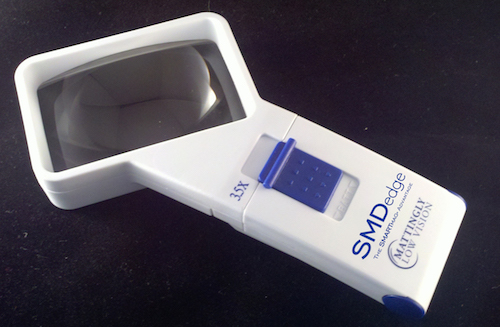
- 1. Handheld Magnifiers: These are small magnifying glasses you hold in your hand.
- Best for: Quick tasks like reading a menu, looking at a price tag, or checking a pill bottle.
- Why people like them: They are small, portable, and usually affordable (often $15 to $100).
- Keep in mind: You need a steady hand to hold them.
- 2. Stand Magnifiers: These rest directly on the page. You do not have to hold them up.
- Best for: Reading a book, doing a crossword puzzle, or looking at a magazine for a long time.
- Why people like them: They are steady and often have a built-in light.
- Keep in mind: They are bulkier than handheld ones, so they are best used at a table.
- 3. Magnifying Glasses: These look like regular reading glasses but have much stronger lenses.
- Best for: Keeping your hands free while you read, knit, or do crafts.
- Why people like them: You can use both hands for your task.
- Keep in mind: You have to hold the object very close to your face to see it clearly.
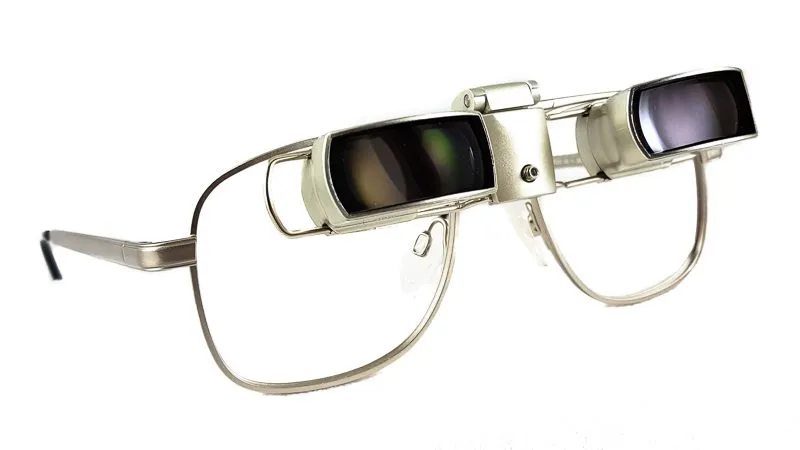
- 4. Telescopes: These help you see things far away. They can be small handheld scopes or mounted on glasses.
- Best for: Watching TV, seeing a street sign, or watching a grandchild play sports. We have some really versatile clip-on bioptic telescopes that can really help you maintain your independence. They can be used on multiple pairs of glasses and they’re a fraction of the cost of hard mounted telescopes.
| Device Type | Magnification | Best Use | Hands-Free? | Price Range |
| Handheld Magnifier | 2x-10x | Short reading, labels, menus | No | 15-100 USD |
| Stand Magnifier | Typically 2x-12x | Prolonged reading, crafts | Partially | 30-150 USD |
| Magnifying Glasses | Typically 2x-6x | Near tasks at a close distance | Yes | 200-800 USD |
| Telescopes | About 2x-8x | Distance signs, TV, and the classroom | Varies | 100-3,000+ USD |
2. Non-Optical Aids (Simple Tools)
Sometimes, the best solution isn’t a lens at all. These are simple changes to your environment that make seeing easier.
- 1. Better Lighting: As we get older, our eyes need more light. A flexible lamp that shines light directly on your book or sewing (without shining in your eyes) can work wonders.
- 2. Large Print Items: You can buy calendars, playing cards, clocks, and phones with extra-large numbers. This puts less strain on your eyes.
- 3. High Contrast Tools: Imagine trying to pour milk into a white cup that is hard to see! Using a dark cup makes the white milk stand out. Using bold markers instead of pens helps, too.
- 4. Reading Stands: These hold your book up so you can sit comfortably without bending your neck.
- 5. Sunglasses: Special tinted glasses (like amber or yellow) can cut down glare, which is very helpful both indoors and outdoors.
- 6. Typoscopes: Typoscopes are black reading guides with a rectangular cutout. When placed over a page, they help highlight one line at a time, improve contrast around the text, and reduce the distraction of “floating” lines. This makes reading easier and less tiring.
3. Electronic and Digital Devices
Technology has reshaped how we answer what are visual aids today. These devices use cameras and screens to make images bigger, brighter, and clearer.
- 1. Video Magnifiers (CCTVs):
This is a machine with a camera and a screen. You put a document under the camera, and it shows up huge on the screen. You can change the colors (like making text white on a black background) to make it easier to read.- Best for: Writing checks, looking at family photos, or reading long letters.
- 2. Electronic Handheld Magnifiers:
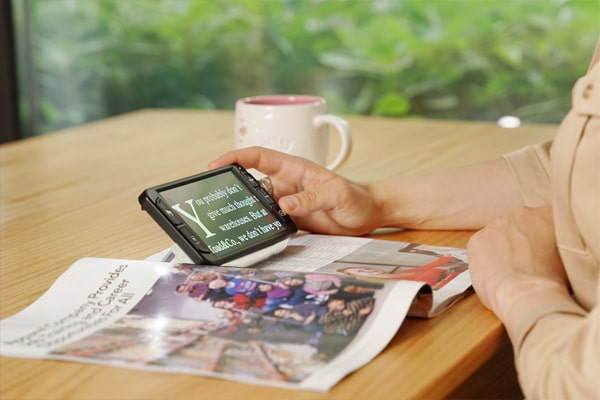
These look like a smartphone. You hold it over text, and the screen shows a magnified version. - 3. Computer Screen Readers:
Software programs can read the text on your computer or tablet out loud. This is wonderful for email or browsing the internet. - 4. Smart Vision Glasses:
These are high-tech wearable glasses. They use cameras and artificial intelligence to recognize faces, read signs, or read books to you. They are more expensive but offer great independence. - 5. E-Readers:
Devices like Kindle or Kobo are great for reading with ease. They allow you to adjust font size, line spacing, and contrast to suit your needs. These devices can store many books in a lightweight design and often include features like text-to-speech or compatibility with screen readers.
| Device | Magnification Range | Portability | Key Features | Price |
| Desktop video magnifier | About 20x-80x | Low | Large screen, high contrast control | 300-4,000 USD |
| Portable video magnifier | ||||
Which Aid is Right for Your Eye Condition?
low vision aids for macular degeneration
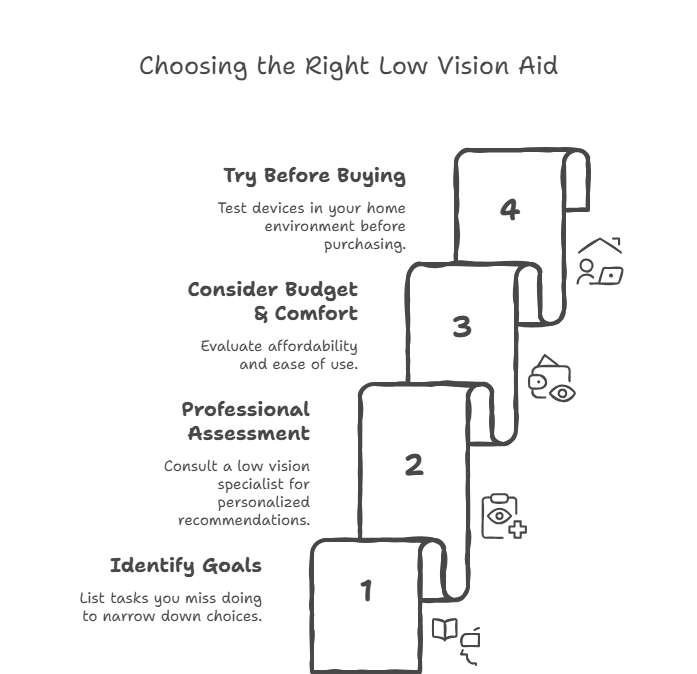
4. Steps to Choosing the Right Aid
Tips for Using Your Aids Successfully
Cost and Insurance: What to Expect
Where to Buy Low Vision Aids?
&
Living Well with Low Vision Aids



 Shop Best Low-Vision Aids with FREE Doctor Consultation.