

Many eye diseases can be prevented with healthy eating habits and regular health checks, along with wearing sunglasses in bright weather and using eye drops to relieve dry eyes. Wearing sunglasses in sunny climates or using eye drops for dry eyes are also great habits to incorporate.
Smoking can have devastating health repercussions for your overall wellbeing and your eyesight in particular. Smokers have an increased risk of age-related macular degeneration, cataracts and glaucoma.
1. Retinal Detachment
Retinal detachment is a potentially blinding condition caused by fluid from the vitreous cavity flowing under the retina and distancing it from its connection with the back wall of the eye. Symptoms include sudden appearance of spots, cobwebs or floating objects called “floaters,” along with dark curtaining across one or more quadrants of your visual field, usually central vision first being affected – without surgery this can result in permanent loss of vision.
Retinal detachments can be prevented through regular dilated eye exams that include pushing on the outside of the eye (scleral depression) to view any risk areas for retinal detachment. If any are discovered they must be repaired immediately with surgery in an operating room; depending on its characteristics it could result in various degrees of vision restoration.
2. Squint
Squinting occurs when your eyes do not work together as intended. It may cause one or both eyes to turn inwards, outwards, up or down (see image above), which is known as strabismus.
Children who consistently squint lose the ability to appreciate depth (known as stereovision). This results in poor vision for one eye – known as amblyopia.
Children who exhibit signs of squints must be evaluated by an ophthalmologist and orthoptist. It’s essential to identify its source; treatment could involve glasses or patching. Routine follow-up visits must take place to track its progression as well as gauge how effective glasses may have been; this also allows the specialist to advise any further courses of treatment necessary.
3. Macular Degeneration
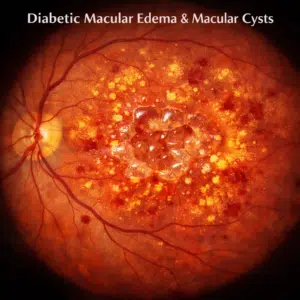
Macular degeneration (AMD), commonly referred to as macular deterioration, refers to any decline in the eye’s macula — a small central region within the retina that allows sharp, straight-ahead vision. This condition can be identified by tissue thinned out within the macula as well as deposits called “drusen” under the retina; AMD is one of the main causes of blindness and visual impairment among people over 50 years of age.
Macular degeneration limits your ability to see fine details and can make reading, driving or recognising faces difficult. Your central vision may become hazy or distorted as a result. While macular degeneration does not cause total blindness and typically does not result in side vision loss; diagnosis typically comes via dilated eye exam as this progressive condition.
4. Cataracts
Cataracts occur when the natural lens in your eye becomes cloudy. Under normal circumstances, the lens helps focus light onto the retina – the light-sensitive tissue located at the back of the eye – but as cataracts progress the lens turns cloudy and yellow in hue, resulting in blurry vision that makes reading, driving and other tasks difficult to perform effectively.
Cataract formation is typically caused by normal aging processes; however, other contributing factors include metabolic diseases like diabetes or exposure to ultraviolet light and direct eye trauma. Cataract is now the leading cause of blindness worldwide.
Surgery to replace your natural lens with an artificial one may also be considered. Phacoemulsification, the most prevalent surgery used today, uses ultrasound waves to break apart cloudy lenses before suctioning off pieces through ultrasound waves.
5. Red Eye
Red eyes are often associated with irritations or infections. The white of the eye and inner lids are protected by a clear membrane called conjunctiva which, if affected by irritation or infection, can become inflamed, leading to blood vessel swelling that results in red or pink-tinged eyes.
Certain cases of red eye may require medical intervention such as antibiotic eyedrops or ointments for effective management, particularly if there is evidence of herpes, severe pain or vision loss, copious purulent discharge or corneal involvement.
Other symptoms of red eye include gritty sensation in the eye, dry eyes, light sensitivity and intermittent blurred vision. If these are present for you, consult an ophthalmologist immediately for an examination; early diagnosis and treatment could prevent serious complications; in extreme cases red eyes could even lead to permanent blindness without prompt care.
6. Glaucoma
Glaucoma is an eye disease that damages the optic nerve. It’s caused by increased pressure in the eye due to fluid build-up. Early-stage open-angle glaucoma patients usually show no or few symptoms, yet over time their peripheral vision and tunnel vision deteriorate, eventually leading to irreversible blindness if left untreated.
Glaucoma occurs when fluid draining channels become blocked or clogged up. As a result, eye pressure rises dramatically, and pressure builds up and damages fibers that transmit messages between your brain and eyes that allow vision. Because this process typically happens slowly over time, damage often goes undetected until irreparable damage has already taken place. Glaucoma is currently one of the primary causes of blindness worldwide affecting adults as well as babies and children; risk increases significantly for people over 40, diabetics, as well as those of African or Mediterranean origin.
7. Refractive Errors
Refractive errors occur when the structure or ability of the eye results in blurry or distorted vision, including myopia (nearsightedness), hyperopia (farsightedness), astigmatism and presbyopia.
Normal eye systems focus light rays onto the retina by way of cornea and lens, known as emmetropic eyes. But sometimes people have eyes where iris or cornea length or curvature exceed normal or the lens curve is unintended – this causes light rays not to focus directly onto retina, leading to blurred vision.
Untreated refractive errors can impede visual development and even lead to amblyopia (lazy eye). Refractive error can be treated using corrective lenses, contact lenses or surgery; for prevention it’s wise to have regular eye exams so an ophthalmologist can test your eyes to ascertain its extent and prescribe corrective lenses if necessary.
8. Uveitis
Uveitis is an inflammatory eye condition that produces eye pain, blurred vision, light sensitivity and floaters. Affecting the middle layer of eyeball known as the uvea and can eventually lead to permanent vision loss, there are three types of uveitis depending on which area of eye is involved: anterior, intermediate and posterior uveitis. Causes may include infection, injury, certain autoimmune disorders like sarcoidosis as well as diseases occurring elsewhere such as herpes AIDS or Lyme disease.
The uvea contains blood vessels to nourish the eye, located inside its white outer shell (sclera). Within it are found: (i) an iris for controlling pupil size; (ii) ciliary body – muscle attached to lens of eye (ciliary body); and choroid, thin membrane with blood vessels connecting iris and ciliary body).
9. Pterygium
Pterygiums are wing-like growths on the conjunctiva (the thin membrane that covers your eye’s white part). If they cover and impact your cornea, vision problems could arise as a result.
Pterygia’s cause remains unknown, although prolonged sunlight exposure and chronic irritation from dry environments are believed to contribute. Pterygia tends to occur more commonly among those living in tropical climates or working outdoors.
Pterygiums are typically cosmetic problems, but can interfere with your vision as well. Left untreated, they can grow large enough to obscure the pupil and may irritate your eye causing redness and sensation of having foreign objects in your eye. Medication drops or ointments can provide temporary relief; alternatively surgery can often successfully be used to remove them – usually conducted as a day procedure under local anesthetic and light sedation.
10. Cancers of the Surface
Cancerous tumors that may form on the surface of an eye include basal cell carcinoma, squamous cell carcinoma and sebaceous cell carcinoma, all of which can be removed with surgery. Conjunctival tumors – including cancerous growths such as squamous cell carcinoma, lacrimal gland tumors or malignant melanomas – may also appear, while tumors inside of eye such as intraocular melanomas and lymphomas (typically non-Hodgkin), require professional care to treat.
Eyes are among the most sensitive parts of our bodies and thus more prone to diseases, making regular health check-ups essential in order to thwart future eye problems from appearing.




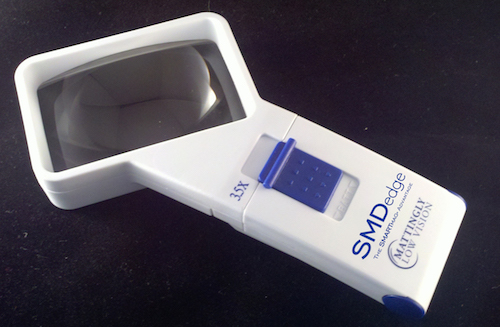
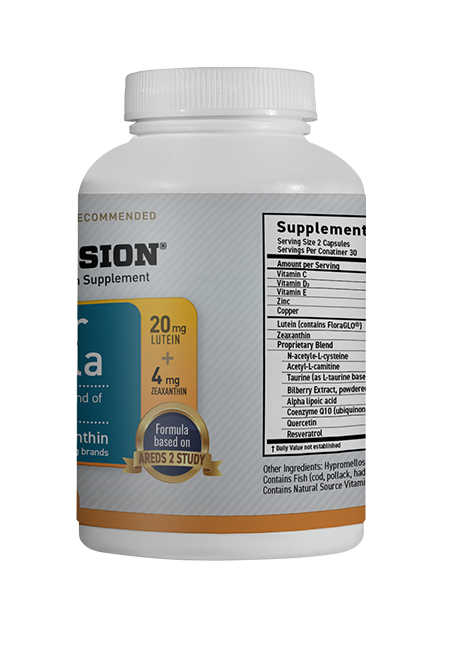

 Shop Best Low-Vision Aids with FREE Doctor Consultation.