
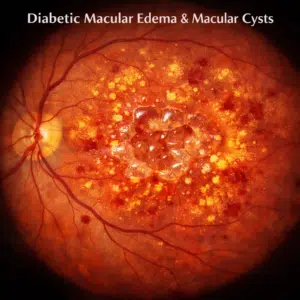
Hypertension damages the blood vessels of the eye and, left untreated, this may result in vision loss. A dilated eye exam can reveal narrowing retinal blood vessels or hemorrhages at the back of the eye (see figure).
Studies have linked moderate retinopathy signs with subclinical and clinical stroke, congestive heart failure, and cardiovascular mortality independent of traditional risk factors1. Hypertensive retinopathy responds well to controlled reduction of systemic blood pressure.
Blurred vision
Blood vessels essential to vision become compromised over time by unchecked high blood pressure, leading to hypertensive retinopathy – an eye disease whereby damaged vessels contribute to impaired vision.
Although high blood pressure can harm nearly every organ of the body, it is particularly devastating for eyesight. Retinal blood vessels narrow and bleed, leading to permanent vision loss accompanied by symptoms including blurred vision, dark spots in visual field and faded colors caused by fluid leaking from choroid tissue below retina; additionally, high blood pressure increases risk for other eye conditions, such as glaucoma which involves increased eye pressure.
Hypertensive retinopathy often progresses silently for years before producing any visible symptoms, due to gradual changes to retinal blood vessels that often don’t cause noticeable symptoms until they reach a moderate stage. If the condition becomes severe, however, sudden increases in eye pressure or other symptoms that require immediate medical intervention could ensue.
Hypertensive retinopathy is an increasingly prevalent sight condition and a significant contributor to blindness in developed countries1. Signs of hypertensive retinopathy can be detected during dilated retinal exams by narrowing of retinal blood vessels (grades 2-3), bleeding within those vessels (grades 2-3), cotton wool spots or hard exudates and swelling of optic disk (macula).
If left untreated, these changes to retinal blood vessels could eventually result in a clot forming in one of the veins draining the retina. If this clot blocks one that feeds blood into central part of retina, obstructing its ability to process light causing vision loss known as “ocular stroke.”
Hypertensive retinopathy can be prevented with effective blood pressure management, including healthy diet and regular exercise, weight management strategies and cutting back on salt and alcohol consumption. Furthermore, taking prescribed medication as directed by healthcare professionals may also help.
Dark spots in the visual field
High blood pressure exerts excess force on various organs of the body, including the retina – an extremely light-sensitive layer of nerve tissue at the back of each eye. Over time, chronic hypertension can damage retinal blood vessels and lead to hypertensive retinopathy – symptoms may include dark spots in your visual field, flashes of lights or curtains over part of your vision; all warning signs for serious retinal damage that must be treated immediately in order to preserve vision permanently.
Damage to retinal blood vessels is visible both visually and via fluorescein angiography tests, which reveal their condition and enable physicians to assess how severe hypertensive retinopathy may be as well as which treatments might be needed for it.
As hypertension continues to damage eye blood vessels, they may begin leaking or bleeding. These blood vessels are known as microaneurysms and haemorrhages and their symptoms can range from mild to severe, often impacting peripheral rather than central vision. Mild hypertensive retinopathy may appear as small dots in peripheral field vision which are difficult to see while more advanced stages may include cotton wool spots, flame haemorrhages or the appearance of hard exudate in optic disc.
Central Retinal Vein Occlusion (CRVO) is one of the most prevalent types of hypertensive retinopathy, occurring when fragile retinal blood vessels start leaking blood into the vitreous fluid that fills up the center of your eye, creating floating dots known as “floaters.” They may appear circular or string-like shapes or can form curtains across certain parts of your field of vision.
Studies of patients with hypertension demonstrate that floating catheters may increase subclinical coronary heart disease, congestive heart failure and cardiovascular mortality, regardless of cholesterol levels and other traditional risk factors. They are also linked to a greater likelihood of experiencing clinically significant coronary heart disease events in future.
Decreased visual acuity
Hypertensive retinopathy causes vision loss by damaging retinal blood vessels, potentially leading to ocular strokes or macular hemorrhages. A patient should provide their history, including when symptoms began, their progression and whether monocular or binocular vision loss exists. Furthermore, other visual symptoms should also be checked such as floaters, halos around lights or distortion of colors (scintillating scotomata).
Hypertensive Retinopathy (HR) is caused by chronically elevated blood pressure levels. This leads to structural changes in retinal blood vessels that narrow arterioles and compress venules where they meet, impairing circulation and possibly leading to retinal hemorrhages and cotton-wool spots. Furthermore, HR may even lead to ischemic optic nerve disease.
Hypertensive retinopathy, while possible for people with normal blood pressure, is more prevalent among those living with untreated high blood pressure. The longer that it remains elevated, the more serious and permanent will be the ocular changes; those living with diabetes, elevated cholesterol levels or smoking histories are particularly at risk of hypertensive retinopathy.
Ocular complications from high blood pressure are often overlooked as patients do not report symptoms or dismiss them as simply part of growing older. Unfortunately, however, these complications can be very severe and have been linked with increased cardiovascular risks; anyone who has uncontrolled high blood pressure should seek evaluation from an ophthalmologist.
Patients diagnosed with hypertensive retinopathy should be closely monitored and treated to lower their blood pressure. This may involve taking medication and leading a healthier lifestyle by exercising regularly and limiting salt, alcohol and tobacco intake.
Keep in mind that signs of hypertensive retinopathy are an indicator of widespread damage in blood vessels throughout your body, so it’s essential that your blood pressure be properly managed and you lead a healthy lifestyle if you want to prevent heart disease and vision problems from appearing.
Swelling of the optic disk
High blood pressure may damage the retina (a transparent light-sensitive structure that lines the back of the eye). Hypertension damages small blood vessels that supply blood to the retina. Their walls thicken, decreasing how much can flow through, which reduces areas that get enough blood supply and can result in diminished vision or vision loss altogether. Over time, retinopathy develops and leads to leakage within retinal blood vessels; eventually even these may burst altogether causing blind spots.
Hypertensive retinopathy‘s hallmark symptom is macular edema – swelling of the optic disk which occurs as a result of hypertension. If left untreated, macular edema can lead to permanent vision loss. Recognizing these signs and symptoms allows you to schedule a dilated eye exam where an ophthalmologist will be able to view retinal blood vessel condition clearly as well as diagnose disease by looking into your eyes using light, giving a clear view into all blood vessel interior structures inside.
A dilated exam may also reveal other symptoms of hypertensive retinopathy, including narrowed blood vessels in the retina, hemorrhages and areas with poor blood flow characterized by white spots on whitening areas of skin indicating poor circulation. All these can be alleviated with proper control of blood pressure.
If symptoms are severe, laser photocoagulation of retinal blood vessels may be necessary. This procedure can be completed quickly in an office by a board-certified ophthalmologist without any discomfort; its aim is to decrease abnormal blood vessels’ sizes while stopping their leakage and thus limit damage done to retina and eyes.
Ocular symptoms may not always provide an indicator of cardiovascular disease; however, recent studies have demonstrated that mild to moderate hypertensive retinopathy is linked with increased risks of subclinical and clinical stroke as well as cerebrovascular events and congestive heart failure irrespective of traditional risk factors. Furthermore, patients who have experienced hypertensive retinopathy experience significantly higher cardiovascular mortality rates compared to those without this complication.



 Shop Best Low-Vision Aids with FREE Doctor Consultation.