
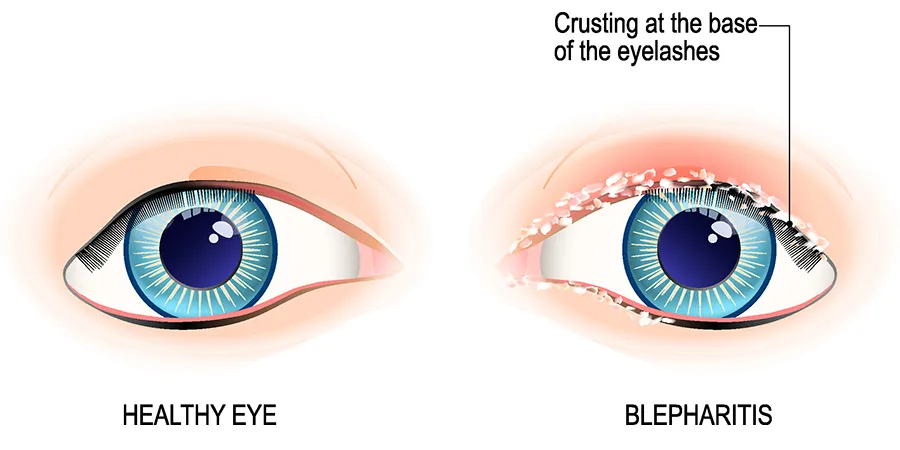
Blepharitis is an extremely prevalent eyelid condition, often leading to inflammation, redness, swelling and itchy eyes. The issue stems from oil gland issues near your eyelashes and is frequently associated with scalp dandruff or even rosacea.
Chronic eyelid problems should be regularly treated using warm compresses, commercial eyelid cleansers and anti-dandruff shampoos for both hair and scalp.
Causes
Blepharitis is an eye condition characterized by itchy, flaky, swollen or reddened eyes and caused by oil gland clogging near your eyelashes, leading to an overgrowth of parasitic eyelash mites (Demodex) feeding on these glands and producing waste that inflames skin around eyes. Bacteria (including Staphylococcus aureus) may also contribute, particularly among patients suffering with other skin conditions like rosacea or allergies such as dandruff or when taking certain medications like Cyclosporine or prednisone.
Seborrheic Blepharitis and Staphylococcal Blepharitis are two types of blepharitis that commonly occur, the former occurring when oil secreted by glands on the edge of your eyelids (meibomian glands) becomes clogged up, irritating nearby areas. Seborrheic blepharitis often appears alongside other skin conditions like dandruff, psoriasis or eczema – more likely affecting female than male individuals.
Staphylococcus bacteria infection of your eyelid can result in styes or chalazion formations that appear as small bumps at the outer corner of your lid. Though not considered serious health concerns, they can be painful and recurrent and lead to further corneal or conjunctiva infections.
Anterior Staphylococcal Blepharitis, a more severe and often-recurring eyelid bacterial infection, is marked by itchy, irritated eyelids with the sensation of foreign bodies in them, red itchy eyes, scale-like deposits on eyelashes or eyebrows, red eyelids and scaling scales on them that resemble dandruff-like scales on them. It often coincides with history of dandruff or skin conditions like rosacea; people more likely than not wear contacts lenses.
Blepharitis can typically be diagnosed by taking into account your medical history and performing a physical examination of the eyelids. Bacteria cultures are rarely needed; instead, your doctor may suggest special ointments or regular lid hygiene practices to relieve symptoms and help prevent future flare-ups. Blepharitis can be an ongoing condition, but those adhering to strict hygiene routines can greatly decrease recurrences of symptoms.
Symptoms
Blepharitis, or eyelash infection, is caused by an overgrowth of bacteria on the base of eyelashes, leading to irritation and itchy eyes as well as unsightly crust buildup on eyelids. Specific symptoms depend on which kind of blepharitis is present: patients suffering from seborrheic blepharitis will typically have greasy flakes that cling tightly to the base of eyelashes while ulcerative blepharitis leaves matted, hard crusts that ooze and bleed; additionally this condition can result in loss of eyelashes as well as distortion on eyelid edges as well as dry eyes.
Anterior blepharitis can be caused by many things, including dandruff of the scalp and eyebrows (seborrheic blepharitis), oil gland infection in the eyelids (meibomian blepharitis) or allergies to scales and bacteria on eyelashes at base (antagonistic blepharitis). An excess of mites living on eyes or hair follicles, as well as blocked or infected oil glands in eyelids (chalazion), is also likely causes of anterior blepharitis.
Blepharitis can be an ongoing condition, but proper hygiene can help alleviate its symptoms. Soaking a washcloth with warm water and applying it twice daily over closed lids for at least five minutes helps loosen scales, crusts or debris from under the eyelashes and remove scales or crusts that have formed at their bases. In addition, keeping eyelids free of dust or other environmental contaminants that trigger or exacerbate blepharitis is important.
Pharmacists can play an instrumental role in educating their patients about self-care for blepharitis and encouraging them to seek professional diagnosis and treatment from eye care professionals. Pharmacists may advise their clients on available nonprescription products like dandruff shampoos, over-the-counter artificial tear drops and skin care treatments that may provide temporary symptomatic relief. When needed, pharmacists can refer patients for further evaluation or referral with regard to eyelid analysis and allergies testing in order to ascertain whether blepharitis is caused by bacteria or allergies.
Diagnosis
Blepharitis is one of the most frequently seen ocular conditions, characterized by redness and flaking at the corner of each eyelid where eyebrows meet. It may come and go over time but usually affects both eyes. Causes for this condition could include dandruff, seborrhea of scalp or eyebrows or poor hygiene as well as dermatological conditions like rosacea or acne or poor facial hygiene; abnormalities with tear film meibomian glands as well as changes to lid-marginal epithelium dynamics may all play a part. When left untreated itchy irritation could even become permanent and result in blurred vision causing permanent eye problems.
Establishing a diagnosis of blepharitis requires taking an accurate medical history and performing a physical exam on your child using a special magnifying tool, followed by sending a swab sample directly to a laboratory in order to look for signs of fungal or bacterial contamination that may be contributing to it. Treatment plans will then be devised accordingly.
Anterior blepharitis in children often results from an excess of bacteria on the eyelashes and crusting along their outer eyelid where eyelashes begin. It could also be the result of seborrhea or dryness underlying skin conditions; while posterior blepharitis usually stems from meibomian gland failure to produce enough oil lubricating eyelashes and cornea of eye. An imbalance between bacteria on eyelashes and meibomian glands producing oil could also play a part. Other contributing causes could include allergies, seborrhea of scalp or eyebrows seborrhea of scalp or eyebrows or dandruff among many others.
As part of treating blepharitis, daily eyelid cleansing with baby shampoo is key. Warm compresses may also help soothe eyes and keep them moistened, while medications in the form of drops, ointments or creams are sometimes required for more serious forms of blepharitis treatment; such medications could include steroids for inflammation reduction; antibiotics to fight infections; or topical medications to control its itchiness.
Treatment
Blepharitis is a treatable condition, managed through proper eyelid hygiene and over-the-counter (OTC) artificial tear products to alleviate symptoms. If your symptoms continue, however, additional medications may be required. Please call West Broward Eyecare Associates or arrange an appointment online today if yours do!
Blepharitis affects the edge of your eyelid where your lashes attach, leading to red, swollen and itchy eyes, as well as potentially leading to painful bumps called styes or cysts that appear like tiny pimples on its edge. Furthermore, symptoms include flaky crusts that form along your lash line – caused by bacteria that isn’t contagious nor does it result in lasting eye damage.
It is wise to visit your doctor if you experience these symptoms as they could be indicative of another eye problem such as dry eyes or more serious skin conditions. Your physician can then suggest treatments and if needed prescribe medication.
Treatment options for blepharitis vary, from over-the-counter (OTC) eye drops to prescription topical and oral medications. Antibiotics can help fight infections and alleviate symptoms while steroid eye drops/gels may provide temporary relief of itching or redness associated with the condition.
Ointments with salicylic acid can help clear away dead skin cells that contribute to blepharitis. You can find such products at most pharmacies. In addition, other home remedies, like applying warm compresses regularly or washing your eyelids gently with diluted baby shampoo can be tried out as additional strategies for fighting this condition.
To enhance the function of your meibomian glands, a physician may perform a special procedure called Blephex. This quick and painless procedure uses a small device that massages the edge of your eyelid gently in order to clear away debris, bacteria, and oil that builds up over time – helping restore normal glandular functioning while helping prevent future bouts of blepharitis from recurring. Blephex provides an effective alternative to traditional eyelid cleaning methods like manually squeezing oil from meibomian glands with your fingers!





 Shop Best Low-Vision Aids with FREE Doctor Consultation.