

Vision problems vary from person to person and this explains why there are various kinds.
Farsightedness (hyperopia), also known as longsightedness, is a condition in which distant objects are easily seen while nearby ones do not focus. Symptoms may include holding things at arm’s length to see them clearly as well as fatigue and headaches from reading or other close work activities.
Hyperopia
Farsightedness (hyperopia) is a vision condition in which nearby objects appear blurry. This happens because an eye has too short a focal length or has an irregular shape, leading light to be focused behind its retina instead of directly onto it and blurring nearby objects while distant ones remain clear. Farsightedness varies in severity and can cause eyestrain, headaches and fatigue after long hours spent reading; those suffering with farsightedness may also develop strabismus or amblyopia, conditions wherein their eyes don’t align properly.
Hyperopia affects around 10% of American citizens, both children and adults alike. The primary causes are eyeball being shorter than usual or cornea having an imperfect curvature, though other possible reasons include natural aging process or loss of elasticity in lens of eye. Hyperopia may be hereditary; so if both your parents were farsighted it’s possible you too will become farsighted.
Farsighted people must exert additional effort in order to focus on nearby objects in sharp focus, which may cause strain and headaches during prolonged near tasks like reading or sewing. Luckily, hyperopia can easily be treated using corrective lenses like eyeglasses or contact lenses; in extreme cases LASIK surgery may also help light reach the retina more directly.
As a farsighted individual, it’s essential that you schedule regular eye exams with your eye care professional in order to detect and diagnose potential eye health problems, and recommend treatment to restore clarity to your vision. Your lifestyle and daily activities play a large part in which type of treatment works best for you – discuss them with your eye doctor to understand which option may work better; for instance if you play sports or perform close up work frequently contact lenses may be the ideal solution for you; keep in mind however that as your health changes over time their performance may need to change accordingly – since corneal shape changes affect how effectively contacts perform over time.
Astigmatism
Astigmatism is a relatively common eye condition that leads to blurred vision. This condition occurs when either the cornea (the clear front cover of the eye) or lens (inside eye) are not shaped correctly, preventing light rays from focusing correctly onto the retina and leading to blurry vision and headaches. Astigmatism can sometimes develop before birth but often arises during rapid eye growth in children and adolescent years; hereditary inheritance or injuries or certain surgical procedures are other possible causes. Nearly everyone has some degree of astigmatism within their eyes – almost everyone has some degree astigmatism in their eyesight!
Normal corneas have a smoothly rounded shape like that of a basketball, while one with astigmatism features an irregular, rugby ball-esque form, which makes it harder for light rays to focus directly onto one part of the retina, leading to blurred vision in all directions.
Eyeglasses or contact lenses can help correct astigmatism by reshaping the front surface of the eye to enable light to come into focus on the retina. Lenses designed with concave or convex curves may be made specifically to address either myopia (nearsightedness) or hyperopia (farsightedness). Astigmatism comes in various forms – some types are regular where all principal meridians of an oblong cornea or lens lie at 90 degree intervals while other varieties may present irregularly with one or more meridians being less than 90 degrees apart; other types can also occur irregularly with one or more meridians being less than 90 degrees apart.
Astigmatism can impact how well you see in dim or dim lighting conditions and your ability to move your head when following moving objects, as well as interfere with reading, driving a car or performing other tasks that require hand-eye coordination. Your optometrist can diagnose astigmatism during a standard eye exam using refraction testing; contact lenses with special cylindrical power can correct astigmatism but must be worn regularly in order to have any effect; leaving it untreated will only exacerbate it further, so if you suffer from astigmatism it’s important that at least once annually get an eye exam so a prescription can be obtained for glasses or contacts at least every year in order to minimize worsening effects on vision.
Presbyopia
Presbyopia, or blurry near vision, typically appears during middle age for many people. It occurs as your crystalline lens loses its ability to change shape to focus on nearby objects – an inevitable part of growing older that affects all. Common symptoms may include needing to hold reading materials further away, threading needles more difficultly or being unable to read numbers on wristwatches or smartphone screens properly, inability to see numbers on wristwatches or smartphones screens and headaches due to numbers not appearing as clearly on wristwatch screens as well as eyestrain headaches and ocular pain resulting from its loss.
Young eyes are capable of quickly and easily shifting focus between distances by changing the shape of their lens, but as people get older this process becomes increasingly challenging due to hardening and loss of elasticity in their lenses – leading most patients to recognize symptoms around age 45.
Your eye doctor can assist in managing presbyopia by prescribing reading glasses or bifocals; these should only be worn when performing close work and may not work if you require astigmatism correction or need different magnifications for each eye. Some individuals find relief through special contact lenses called bifocal or progressive lenses which are designed to correct both distance vision as well as near vision.
Presbyopia can be treated surgically as well, with treatments including monovision with LASIK or PRK, corneal inlays and refractive lens exchange (RLE). Each option may provide different benefits depending on an individual patient’s needs and risk factors – one may prove superior over another.
Pharmacological treatments are being studied for presbyopia. One type of medication reduces pupil size to deepen focus while another softens natural lenses. Both approaches are experimental in nature and their long-term safety and efficacy is yet to be determined. A new type of cataract surgery utilizing multifocal intraocular lenses is currently under evaluation. This lens is being promoted as a permanent solution to presbyopia and could transform near vision correction technology over time. It will be fascinating to observe its development over time; regardless of which treatment approach you opt for, annual comprehensive exams with your eye care professional remain essential.
Macular Degeneration
Macular degeneration is the gradual degeneration of the macula, an area at the back of our eye that allows us to clearly perceive fine details for activities such as driving, threading a needle and reading. Cancer of the eyes is one of the primary causes of central vision loss among people over 60, often leading to blurred or darkened areas in vision that make everyday tasks like recognising faces, reading or driving difficult and impairing your ability to distinguish shapes and colors. Macular degeneration is the leading cause of blindness among people aged 65 or above and more likely to affect women than men. Although its exact causes remain unknown, risk factors such as smoking, poor dietary nutrition and exposure to sunlight may increase one’s likelihood of macular degeneration.
Dry Age-Related Macular Degeneration (ARMD) is the initial stage of macular degeneration and is characterized by gradual and slow thinning of tissues that make up the macula, leading to abnormal yellow deposits under the retina known as drusen. Although no visible loss occurs early on, regular dilated eye examinations should be scheduled with your doctor in order to detect presence of drusen deposits and assess risks of progression to Wet forms of macular degeneration.
Wet Age-Related Macular Degeneration (ARMD) is less prevalent than its Dry form, and occurs when abnormal blood vessels begin to proliferate beneath the retina and leak fluid or blood, blurring or distorting your central vision. Symptoms may include sudden vision loss, difficulty adapting to low light levels, blurry or blind spots in central or overall vision, hallucinations of geometric shapes or faces or sudden loss.
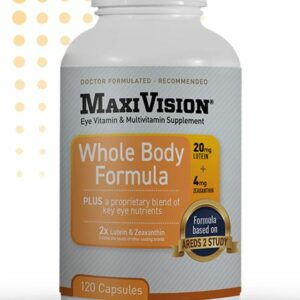
At present, there is no cure for wet macular degeneration; however, new treatments are reducing vision loss severity and improving quality of life for affected patients. Vitamins and supplements may slow progression toward wet macular degeneration; injections of Vascular Endothelial Growth Factor could help decrease abnormal blood vessel growth rate and limit leakage rates.





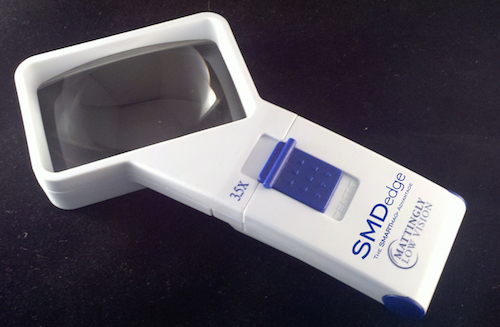

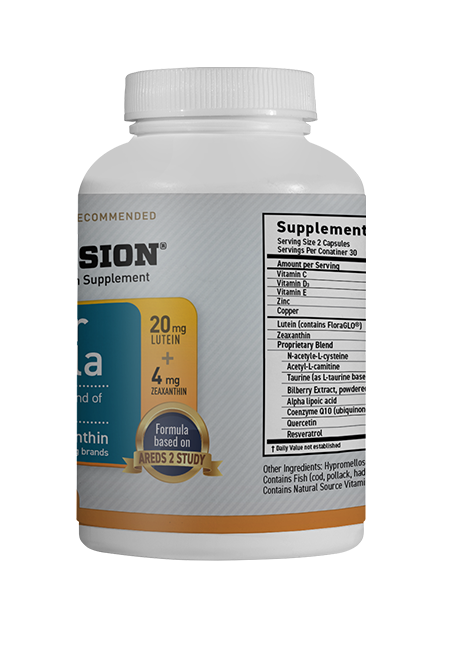
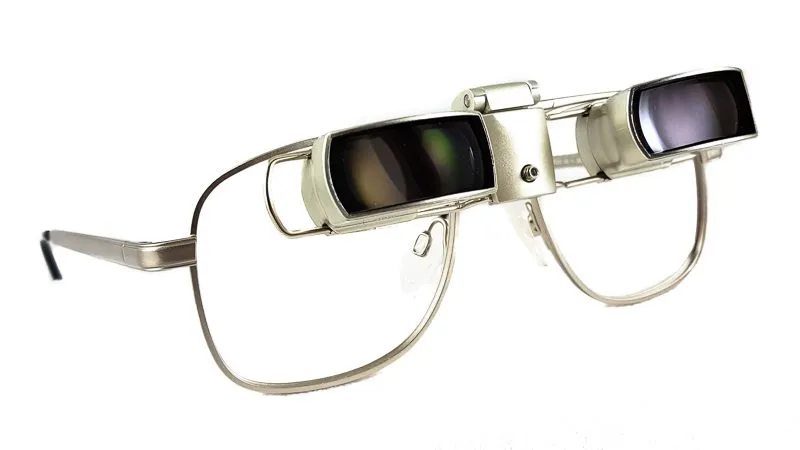
 Shop Best Low-Vision Aids with FREE Doctor Consultation.